Book Publishing Terms Every Expert Author Should Know

Book publishing terms
A B C D E F G H I J K L M N O P Q R S T U V W X Y

This glossary of book publishing terms is designed specifically for experts and thought leaders working with a professional publishing team.

A book is one of the most powerful authority-building tools available to an expert, executive, coach or thought leader. It opens doors, establishes credibility, and gives you something tangible to put in the hands of prospects, media and audiences.

But even when you’re working with a professional publishing team – and letting them handle the heavy lifting – understanding the language of publishing makes you a better collaborator. It helps you know what’s being done on your behalf, what you’re approving, and how each decision connects to your bigger goals: building your reputation, growing your business, and getting your ideas into the world in a way that reflects your expertise.

This glossary explains the key terms you are likely to encounter throughout the publishing process. You don’t need to master all of this – you just need enough to have informed conversations, make confident decisions, and get the most out of working with your publishing team.

Drawn from The Self-Publisher’s Amazon Playbook by Jane Tabachnick.

A

Algorithm

Amazon’s search algorithm determines which books appear in search results – and in what order – when someone searches on Amazon. Think of it as Amazon’s version of Google. A professionally optimized book listing is built to work with the algorithm, so your book gets in front of the right readers without you having to do anything extra.

A+ Content

Amazon A+ Content is an enhanced section of your book’s Amazon listing that goes beyond the standard description. It can include additional images, pull quotes, and formatted text – essentially a mini landing page within Amazon. For thought leaders and executives, it’s a valuable space to reinforce your credentials, communicate your book’s impact, and convert browsers into buyers.

ARC (Advance Review Copy)

An Advance Review Copy is an early version of your book distributed to reviewers, colleagues, endorsers, and influencers before your official publication date. The goal is to have reviews and endorsements ready the moment your book launches. For authority-driven authors, ARCs sent to respected peers and industry figures generate the kind of social proof that signals your book is worth reading before a single stranger weighs in.

Author Central

Amazon Author Central is the platform where your author presence on Amazon is managed. It’s where your Author Page lives, and it gives your publishing team the ability to add editorial reviews, update your biography, and access sales insights. Consider it your author headquarters on the world’s largest bookstore.

Author Page / Author Profile

Your Author Page on Amazon brings together your biography, photo, and all of your published books in one place. For experts and executives, a well-crafted Author Page reinforces your positioning and makes it easy for anyone who discovers one of your books to learn more about you and explore your broader body of work.

B

Best Seller Rank (BSR)

The Amazon Best Sellers Rank is a real-time indicator of how well your book is selling compared to others in the same category. Reaching #1 in a well-chosen category – even briefly – earns your book an official “Best Seller” badge that can be used in your marketing, on your website, in your speaker bio, and across your promotional materials. It’s a meaningful and recognizable credibility marker.

BISAC Codes

BISAC codes are the standardized subject categories the publishing industry uses to classify books – the system that determines where your book is shelved on Amazon and in libraries and bookstores. Your publishing team selects the codes that best match your content and audience, ensuring your book reaches the readers most likely to benefit from it.

Book Description

Your book description is the sales copy on your Amazon listing – the text that convinces a potential reader to buy. For an authority-driven book, it needs to go beyond summarizing content: it should speak to your ideal reader’s challenge or aspiration, establish your credibility quickly, and make a compelling case for why your perspective matters. Your publishing team will craft this to work both for readers and for Amazon’s search algorithm.

Book Layout Design

Book layout design is the interior formatting of your book – how text, headings, images, and spacing are arranged on the page. For executives and thought leaders, this matters more than people realize: a beautifully designed interior is one of the clearest visual signals of a professionally produced book. It’s the difference between something that reads like a polished business title and something that reads like it was assembled at home.

Book Listing Page

Your book listing page – also called your product detail page – is your book’s home on Amazon. Every element of this page works together to build trust and drive purchases: your cover, title, description, reviews, A+ Content, and author information. A professionally managed listing treats this page as the sales and credibility asset it truly is.

Book Reviews

Reader reviews are one of the most visible signals of a book’s credibility and quality on Amazon. For authority-driven authors, reviews aren’t just nice to have – they’re part of your professional reputation on the platform. A thoughtful pre-launch strategy, including ARCs and outreach to your network, builds the review foundation that supports both visibility and your broader promotional goals.

C

Categories

Amazon categories are the subject sections where your book is listed – the digital equivalent of bookstore shelves. Strategic category selection is one of the highest-leverage decisions in publishing: the right categories position your book to earn a Best Seller ranking, reach readers actively browsing your topic, and lend your listing a badge that travels well in marketing materials.

Cover Design

Your book cover is your most visible marketing asset. It’s the first thing people see on Amazon, at a speaking event, on your website, or in a media feature. For thought leaders and executives, a professional cover communicates authority and expertise at a glance – at thumbnail size on a screen and at full size in someone’s hands. A great cover signals that the content inside deserves attention.

Customer Reviews

Customer reviews are the star ratings and written feedback readers leave on your Amazon listing. They influence both potential buyers and Amazon’s algorithm. Building a genuine, positive review base – through strategic pre-launch outreach and ongoing reader engagement – is a core part of any professional book promotion strategy.

E

eBook

An eBook is the digital version of your book, readable on Kindle devices or the free Kindle app on any phone, tablet, or computer. For thought leaders, publishing an eBook alongside your print edition significantly extends your reach — it’s instantly available worldwide, easy to share, and enables promotional strategies like limited-time price reductions that can spike visibility and introduce your ideas to new audiences.

Editorial Reviews

The Editorial Reviews section of your Amazon listing is prime real estate for authority-building. Unlike customer reviews, you control this content entirely – it’s where you display endorsements from industry leaders, media mentions, and blurbs from respected figures in your field. For executives and thought leaders, a strong editorial review section signals that your work has been recognized beyond readers alone, which resonates with prospective clients, speaking bureaus, journalists, and collaborators.

G

Great on Kindle

Great on Kindle is an Amazon program that highlights high-quality nonfiction eBooks with enhanced reading features. Selection signals quality and provides additional visibility within Amazon – particularly relevant for nonfiction thought leadership books written by experts who want their ideas to reach as wide an audience as possible.

H

HTML for Amazon (Hypertext Markup Language)

Amazon allows specific formatting code in your book description and editorial reviews – bold text, bullet points, italics, line breaks, and more. Properly formatted listing copy is easier to read, more visually compelling, and more likely to hold a reader’s attention long enough to convert to a sale. Your publishing team handles this behind the scenes, but it’s one of the small details that adds up to a polished, professional listing.

I

Indexing

When your book is indexed on Amazon for a keyword, it means your book appears in search results when someone types that term. For example, if your book is indexed for “executive leadership” or “business growth strategy,” it surfaces in front of readers actively searching for books on those subjects. Indexing is shaped by your keywords, categories, title, and description – all elements your publishing team optimizes deliberately on your behalf.

ISBN (International Standard Book Number)

An ISBN is the unique 13-digit identifier assigned to your book – its official fingerprint in the publishing world. It’s required for distribution beyond Amazon, including bookstores, libraries, and wholesalers. For executives and thought leaders who want their name listed as the publisher, your team can register a custom ISBN through Bowker. It’s a small detail that affects how your book is perceived across the industry.

K

KDP (Kindle Direct Publishing)

Kindle Direct Publishing is Amazon’s publishing platform – the infrastructure through which your book is published, distributed, and sold on Amazon. Your publishing team works within KDP to upload your book, manage pricing, set categories and keywords, and handle the technical details of getting your book live and optimized. You don’t need to touch it directly; understanding it exists helps you follow what’s happening at each stage of the process.

KDP Select / Kindle Unlimited

KDP Select is an optional program that places your eBook in Kindle Unlimited – Amazon’s subscription reading service — in exchange for Amazon exclusivity during 90-day enrollment periods. It can increase readership and discoverability, particularly for nonfiction. Your publishing team will discuss whether this aligns with your distribution goals, especially if wide availability across multiple platforms is part of your strategy.

Keywords

Keywords are the search terms your publishing team enters when setting up your book – the bridge between what readers are searching for and your book appearing in those results. For thought leadership books, the right keywords connect your expertise directly to the problems your ideal audience is actively researching. They’re invisible to readers but essential to making sure the right people find your book.

Kindle

Kindle is both Amazon’s e-reader device and the format for digital books on Amazon. A Kindle edition of your book is immediately available to millions of readers worldwide – no shipping, no waiting. For thought leaders whose book is as much a business tool as a product, the Kindle edition is often the version that travels furthest and fastest.

M

Metadata

Metadata is the complete set of information that identifies and describes your book: title, subtitle, author name, publisher, publication date, ISBN, categories, keywords, and description. Think of it as your book’s digital identity. Well-crafted metadata is how Amazon – and the entire book industry – understands what your book is, who it’s for, and where it belongs. Your publishing team builds and optimizes this deliberately, because it shapes everything from search visibility to how your book is distributed across platforms.

O

Optimization

Book listing optimization is the process of ensuring every element of your Amazon listing is working as hard as possible – for discoverability, for credibility, and for conversion. For thought leaders and executives, an optimized listing also reflects your professional brand: it looks polished, communicates authority, and gives every potential reader, client, or media contact who lands on it immediate confidence that this is a serious, well-produced book.

P

Print on Demand (POD)

Print on demand means physical copies of your book are printed only when someone orders one – no warehouse, no upfront inventory investment, no boxes of unsold books. For executives and thought leaders, POD also means your publishing team can order author copies at cost in bulk for speaking events, client gifts, media outreach, and promotional use – always on demand, always available.

Professional Book Reviews

Professional book reviews come from credentialed reviewers at recognized publications, literary services, or media organizations. They carry a different weight than reader reviews – they indicate your book has been evaluated by the industry. For thought leaders pursuing media coverage, speaking opportunities, or positioning as a subject matter authority, professional reviews are a meaningful addition to your book’s promotional profile.

Publisher

When you work with a professional self-publishing service, your book is published under your name – you retain ownership and creative control, while your publishing partner manages the process. You are the publisher. The answer to “who published your book?” is you – with expert support. That model is increasingly the choice of executives and thought leaders who want the quality of traditional publishing with the control and speed of independent publishing.

R

Royalties

Royalties are the earnings you receive from each sale of your book. On KDP, eBook royalties can reach 70% of the list price, and print royalties are based on your price minus production costs. For most thought leaders and executives, the direct revenue from book sales is secondary to what the book generates indirectly – new clients, higher speaking fees, media opportunities, and a level of credibility that opens doors no business card ever could.

S

Subtitle

Your subtitle is the line beneath your title on your Amazon listing – and one of the most powerful authority and discoverability tools in publishing. A strong subtitle tells your ideal reader exactly what the book will do for them, while embedding the search terms most likely to connect your expertise with the people looking for it. For executives and thought leaders, a well-crafted subtitle also functions as a positioning statement – it defines your niche and your promise in a single line that appears everywhere your book does.

T

Trim Size

Trim size is the physical dimensions of your printed book – its width and height when closed. Standard sizes carry genre and market expectations: a 6×9″ trim reads as a serious business or professional title; a smaller size feels more personal. Your publishing team will recommend a trim size that fits both your content and how you want your book to be perceived on a shelf, in a speaker’s hands, or in a client’s office.

Your book is one of the smartest investments you can make in your brand. For experts, executives, coaches, and thought leaders, a professionally published book doesn’t just generate sales – it opens doors, elevates your speaking profile, attracts ideal clients, and establishes you as the go-to authority in your field.

Understanding these book publishing terms means you can engage confidently with your publishing team, make informed decisions at every stage, and recognize all the ways your book is working for you long after launch day.

Ready to publish your book with the support of a professional team? Let’s talk. 

Want to go deeper? Grab your copy of The Self-Publisher’s Amazon Playbook  

Choosing the Best Self-Publishing Book Company for Your Needs

Choosing the best self-publishing book company for your needs_

Choosing the right self-publishing book company is an important decision in bringing your book to market successfully. If you’ve completed writing your book, it’s easy to think your author work is done. If you haven’t already decided on your publishing route, now it’s time to consider your self-publishing options. You’ll need a company to print, distribute and sell your book. However, that’s just one piece of the puzzle. When you self-publish a book, you take on many new responsibilities. You need to find the right self-publishing company, create an effective marketing plan, and choose the right printing options for your book. In this post, we’ll cover all the details you need to know when choosing a self-publishing company.

Self-publishing a book can seem like an intimidating process. After all, you’re essentially the publisher, marketer, and distributor all in one. But with the rise of self-publishing platforms such as Amazon Kindle Direct Publishing (KDP), it’s now easier than ever to get your book out there. In this blog post, we’ll cover everything you need to know about choosing the best self-publishing book company for your needs and goals.

While Amazon and other platforms make it easy to simply upload a file to publish a book, many of you will want a more professional-looking product. You want bookstore quality and a book that will speak to your ideal audience and get you the results you are seeking.

The kind of self-publishing companies we are talking about in this post

It is important to frame this conversation with what kind of self-publishing book companies we are talking about.­­­­­­

Some people refer to Amazon and Ingram Spark as self-publishing companies. While some of them offer services to help you with the self-publishing process, they are best as platforms you can use to self-publish [print, sell, distribute] your book. The downside to hiring a platform to also handle your self-publishing process and book launch or promotion is that these companies will only sell you what they offer, which may or may not be the best option for you and your book.  They also may not provide the best bang for
your limited book budget.

What this post is about is self-publishing book companies that offer to guide you through self-publishing your book or offer done-for-you self-publishing.

We call it professional self-publishing. It’s also been called assisted self-publishing.

By using a separate company from the platforms to self-publish your book, you can get unbiased advice and are not get locked into one platform. You can take advantage of the best resources across multiple sites and increase your chances
of success for your book.

What exactly is self-publishing?

According to dictionary.com:
self-publishing is a verb, gerund or present participle:
(of writer)publish (a piece of one’s work) independently and at one’s own expense.

There is only one key difference between self-publishing and traditional publishing:
“If the author owns the rights and royalties, then the book is self-published. If the publishing company owns the rights and royalties, then the book is traditionally published.” [souce: Scribemedia]

Self-Publishing Paths – your three options to consider

  1. Self-publish your book yourself by handling every aspect of preparing your book for publication, gathering all the necessary components, and uploading it to the selected publishing platforms

  2. Hire a company or consultant to handle all aspects of your publishing- taking your completed final draft through successful publishing and book launch

  3. Hire a company or consultant to handle a portion of the preparation or book setup for you

 While self-publishing has made it easy for anyone to become a published author without needing a book publishing deal, there are a lot of moving parts, nuances, and micro-decisions to be made. Self-publishing requires a team to handle all the different, required aspects of publishing your book. These include title, cover design, book formats, categories, keywords, etc. While anyone can do it, the question is, do you want to earn your Ph.D. in publishing, or is it a better use of your time to hire a professional self-publishing company or self-publishing consultant to shepherd you through the process.


DIY or hire it out – Which type are you?   

You may have a finished manuscript, but it’s not quite ready for publication. After all, you wouldn’t want to put your name behind something that wasn’t well-edited or even error-free.

As we’ve discussed, self-publishing is more than just uploading your manuscript to publishing platforms. It requires many different functions from book editing, design, copywriting, and so on. You can build your own team and then act as a project manager to oversee the process of finding your own book printing company, creating a professional cover and layout, creating front matter for your book, and several other important tasks. You can learn to do this yourself.

There are many resources available to help you understand the self-publishing process. Free resources include free courses, YouTube videos, and online Facebook groups. There are also paid classes and membership groups that provide training and a place to learn or ask questions as they come up.

As with any new endeavor, you’ll have to learn new skills and technologies. If you have never hired or assembled a team, you may not know what questions to ask, or how to properly vet the freelancers. Taking the time to understand the publishing process, being willing to ask questions, and having a measure of patience will help you succeed at doing it yourself.


Hire a self-publishing book company

The other option is to hire a self-publishing consultant or self-publishing company team to direct, oversee and manage the process of self-publishing your book.

When you hire a self-publishing book company or consultant, you get someone to advise you on what you need to do, and when it is needed. Then, they bring in their team as needed to accomplish the tasks and move your manuscript through the process of becoming a book and publishing and launching it. As you are the owner of the intellectual property, you will be consulted on and get the final say in all decisions. With this path, you will be making informed decisions as your company/consultant should be sharing with you the pros/cons and what to consider before making the decisions. 

You can sit back and make high-level decisions while they do all the heavy lifting and keep it on track. No details were left out and it is usually stress-free. This method takes the least amount of your time. There is no time needed to search for team members or vet them – this has already been done for you.


The cost of hiring a self-publishing book company

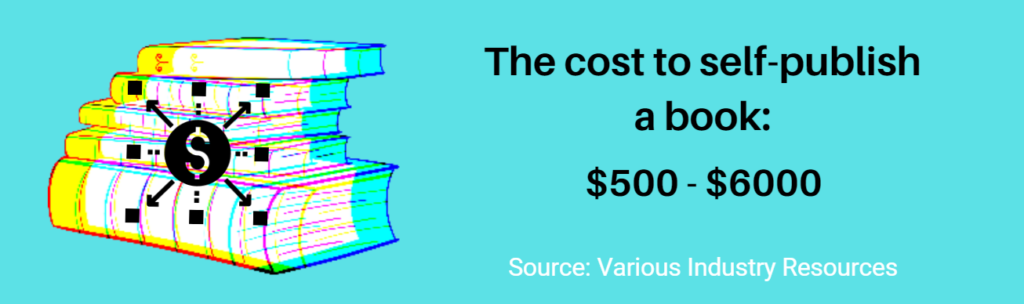
The cost of hiring a professional self-publishing book company or self-publishing consultant may create sticker shock at first glance. When you factor in the professional advice they offer, the time saved in not having to source, vet, and hire a team, project management or do the actual publishing yourself, it is probably well worth it. Outsourcing it to professionals, will save you time and likely save you from a lot of mistakes and headaches. The process will go smoothly, and you will end up with a great, professional-looking book. Plus, it was one less thing on your already busy plate.

If you go with the third option, to hire out only some of the needed parts of self-publishing your book, it will be helpful to learn as much as you can about the self-publishing process so you can decide which parts to do yourself DIY and which parts to outsource. 

cost to self-publish a book

First time authors don’t know what they don’t know when it comes to self-publishing

As an author, there are a lot of micro decisions to make along the way to publishing your book. Some of which will have long-term impacts. Impacts that you may not understand when just starting. Here is just one example of a common situation that first-time authors come up against. One example of this is the sourcing of their ISBNs.

ISBN Selection

Authors often try and conserve costs­­. Getting the required ISBNs for your book is costly. Bowker, the main player in the US market, sells one ISBN for $125, or a block of ten ISBNs for $295. If your book is in ebook and paperback formats, you will need two ISBNs, one for each version of the book.

Amazon offers free ISBNs. Sounds good right? Once you use Amazon’s free ISBN, you can’t take it with you to other platforms. Go to publish your book on B &N, or Apple Books and your ISBN is not usable. The other downside to this free ISBN is that it requires you to list Amazon as your imprint. This can detract from your book, as it is obvious your book is self-published; it may also deter other bookstores from carrying your book.

This is something first-time authors learn the hard way. If they decide later to publish the book on multiple platforms, they often must go through the process of republishing their book as a new version with a new ISBN that they own. This is because a new ISBN can only be issued if there are changes in text, format, or binding to justify it. This can be costly in terms of both time and money.

Questions to ask yourself– are you willing to live with rookie mistakes? They can be costly to your brand and your wallet, as well as drag out and delay your publishing timeline.

With all of this in mind, there are several things to consider before choosing the best self-publishing book company for you and your manuscript.

Not all self-publishing book companies are created equal


Here are a few examples of self-publishing book company service offerings: 

Company A – offers editing and proofreading

Company B – offers all steps from idea to published book, on sale on all major platforms – offers no marketing 

Company C – offers all steps from idea to published book, on sale on all major platforms – offers book launch, book marketing and PR

When you hire a fully staffed self-publishing company where everything is done in-house, you get a ready made team. With a solo self-publishing consultant, you will also get a team, as they will quickly assemble trusted, vetted professionals from their network. 


Before you hire a self-publishing company – 3 factors to consider

When you are looking to hire a self-publishing company, it’s important to understand what stage of the process you are in and what you need to bring your book to market. What are you as the author bringing to the party? Here are three questions to consider:

1. Is your manuscript written and edited? 

Some authors get as far as they can with their book and will tell us their manuscript is finished. They’ll look to us to take it through the editing and proofreading process. Other authors come to us with a fully edited manuscript that they have edited and proofread for typos and grammatical errors.

 When an author says their manuscript is finished, this can mean two things. They have taken it as far as they can and want help polishing and packaging it for publication, or, it is fully edited and ready for publication.

2. Do you know what your goals are as an author?

Understanding your goals can have an impact on the publishing strategy you need. You may think of publishing your book as separate from marketing your book and may be planning to use different companies for each phase of your book’s journey. It is important to understand what your bigger author goals are, as they can have an impact on how and where you decide to publish your book. Your self-publishing company or self-publishing consultant should inquire about this and work with you to publish your book to help it meet your goals. Different goals can mean a different strategy is needed. Here are two examples:

 A local real estate agent wants to publish a book to hand out to prospects. It will be their unforgettable business card.  Their main goal is to stand out in their local market. Being published on Amazon is simply an added boost for them so that when someone googles their name, their book listing shows in their search results, adding additional credibility to them. However, they aren’t looking for sales on Amazon or to get national recognition or visibility. They need a simple strategy – Publishing in both paperback and eBook formats, and publishing only on Amazon may be sufficient for them.

A consultant looking to increase their reach, visibility, and credibility and presell more high-ticket clients will want the broadest reach, distribution, and credibility. They will want to have their book published on every possible platform [Amazon, Barnes & Noble, Apple Books, Kobo…], and they will want multiple book formats- paperback, eBook, audiobook, and possibly hardcover, as well as the option to have their books carried in bookstores and libraries. They will probably want a visibility campaign to get the word out about their book and reach more people.

3. How willl you handle marketing and book promotion?

The typical self-published author sells about five copies of their book. The average U.S. book now sells less than 200 copies per year, and less than 1000 copies over its lifetime. Books don’t automagically sell themselves, so you will want to have some kind of book launch and promotional plan. This may be something you look to your self-publishing book company or self-publishing consultant to provide, or you may have this covered elsewhere. 

It is important to put time and thought into how your book will get out into the world, and who you want to have do that for you or with you, or if you plan to go totally solo and handle it on your own.  Some self-publishing companies offer promotional strategies, guidance, or actual implementation. It may be included in your self-publishing package, as an add-on service, or by referral to partners who they can recommend to help you with this.

Comparing self-publishing book companies – what to look for

It’s important to define what publishing a book means to you, and how a self-publishing company defines it as a service offering before you hire them. I see a lot of confusion about what it means to publish a book; often clients think that a book launch promotion is part of book publishing. It can be, but it may not be, so this is an important point to clarify in advance of hiring a book publishing company or consultant, and choosing a publishing package. It’s important to understand how and what publishing a book means and what your self-publishing company defines it as and what it is exactly that they offer.  Does your self-publishing package include any launch, promotion, or book marketing?

Define exactly what self-publishing a book means – make sure your self-publishing company is on the same page with you

Let’s go to the dictionary to shed some light on a few terms that may be being interchanged in the publishing process and can lead to some unintentional confusion.

► Publishing: The term publishing means, in the broadest sense, making something publicly known. Historically, it came to refer to the issuing of printed materials such as books and magazines.

What is the meaning of a published book? Produced or released for distribution 

► Book Launch: A book launch is any even wherein the author or their public relations (PR) team invites a group of people to celebrate the arrival of an upcoming book

► Book Marketing: A book marketing plan includes publicity and promotional marketing efforts to help sell books and reach more readers

► Book Publicity: A plan and campaign designed to raise awareness about the book and create buzz. Unlike marketing, it’s goal are not specifically tied to selling books. 

Conclusion

Choosing the right self-publishing company is an essential part of the self-publishing process. Whatever publishing path you take, you need to find the right platforms, companies, and resources to help you bring your book to market.

Before looking for a self-publishing company, as we discussed, it’s important to know your author goals, how much you want to do yourself, and how much you want to outsource before you start evaluating the self-publishing book company options.            

The best self-publishing company for you will depend on your publishing goals and which company offers the level of service and package you are seeking. It’s important to carefully consider each company and that they offer services that match your needs and goals before making a final decision.

Jane Tabachnick & Co. is a full service self-publishing book company. We work with non-fiction authors to help take them from idea through every stage of book publishing and book promotion.  Find out more about working with us here 

Listen to our podcast: The Self-Publishing Blueprint here