A+ Content (formerly known as Enhanced Brand Content) is a free tool available through the KDP publishing platform that lets authors add graphics – and some text – to their book listing to make it visually engaging. It shows up under “From the Publisher,” and it can genuinely move the needle: basic A+ Content can increase sales by up to 8%, and well-implemented Premium A+ Content can increase sales by up to 20%.
If you haven’t built this out for your book yet, here’s everything you need to know.
Amazon offers authors a section for bonus content called A+ (A Plus) Content. It’s a free tool that allows you to add graphics to your book listing to make it more visually engaging and give prospective buyers additional information to help them decide.
With A+ Content, you can add branding, brand stories, detailed product shots, and more about you and the book – content that goes beyond what’s available in the basic listing. Used well, this extra content can increase book sales.
The standard Amazon book listing only allows text up to two thousand characters, with no images or graphics other than the cover. A+ Content changes that. It lets you showcase your book’s distinguishing features, benefits, rave reviews, and brand story in a compelling way.
A+ Content appears near the middle of a book listing, under “From the Publisher.” While the exact placement varies, most readers have to scroll to see it.
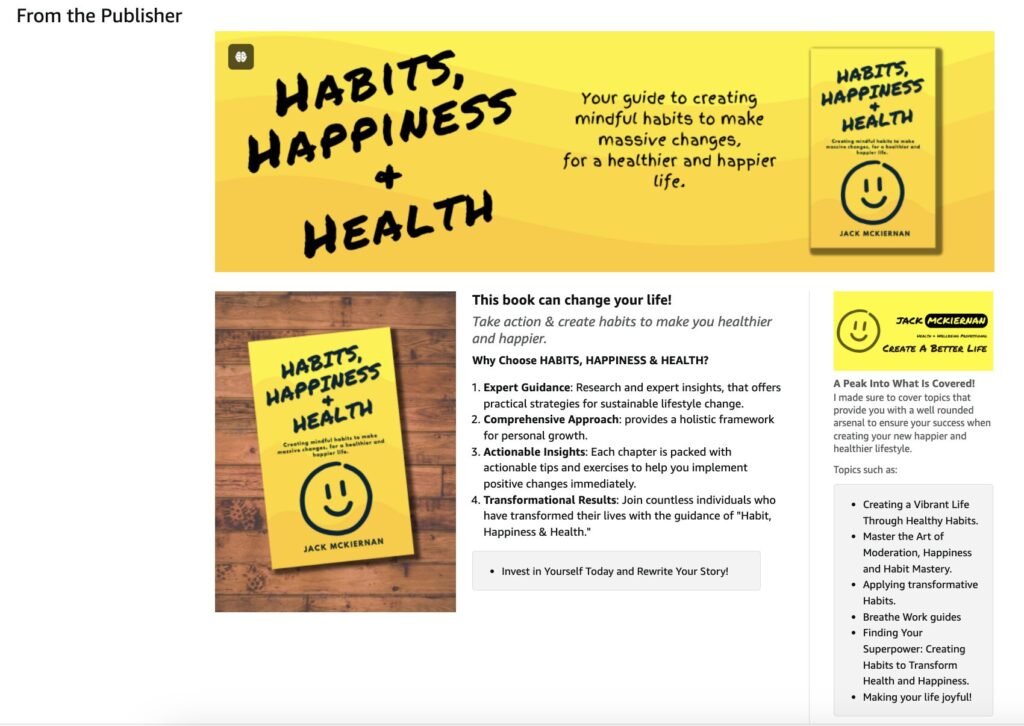
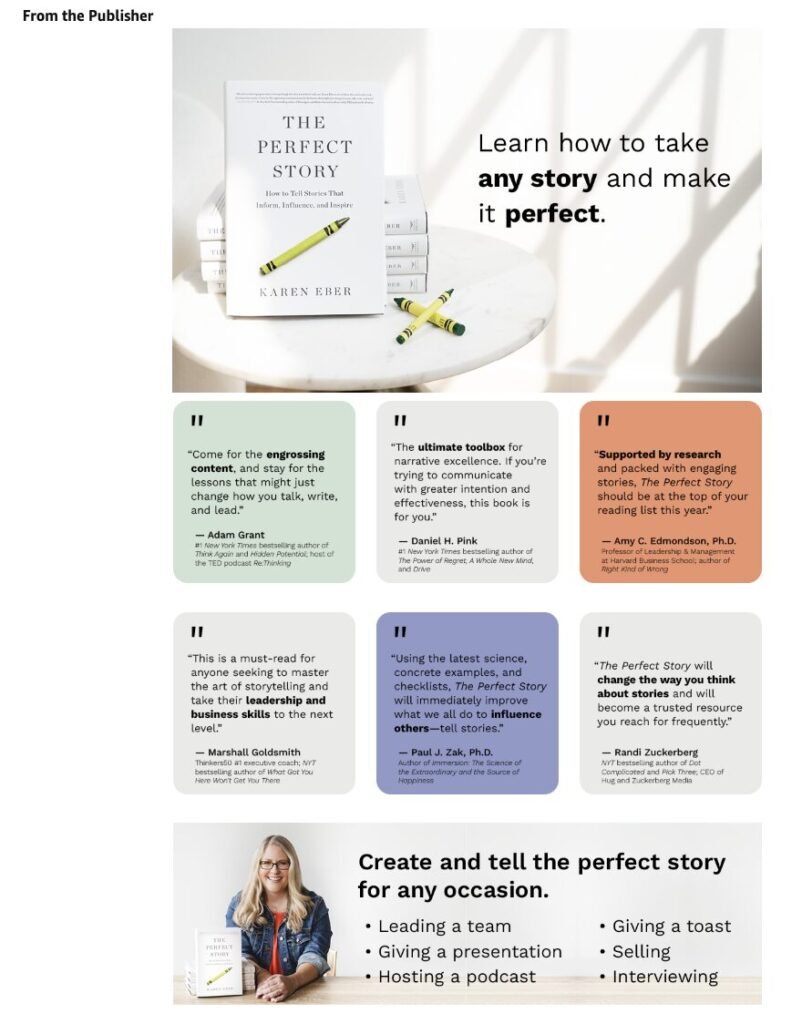
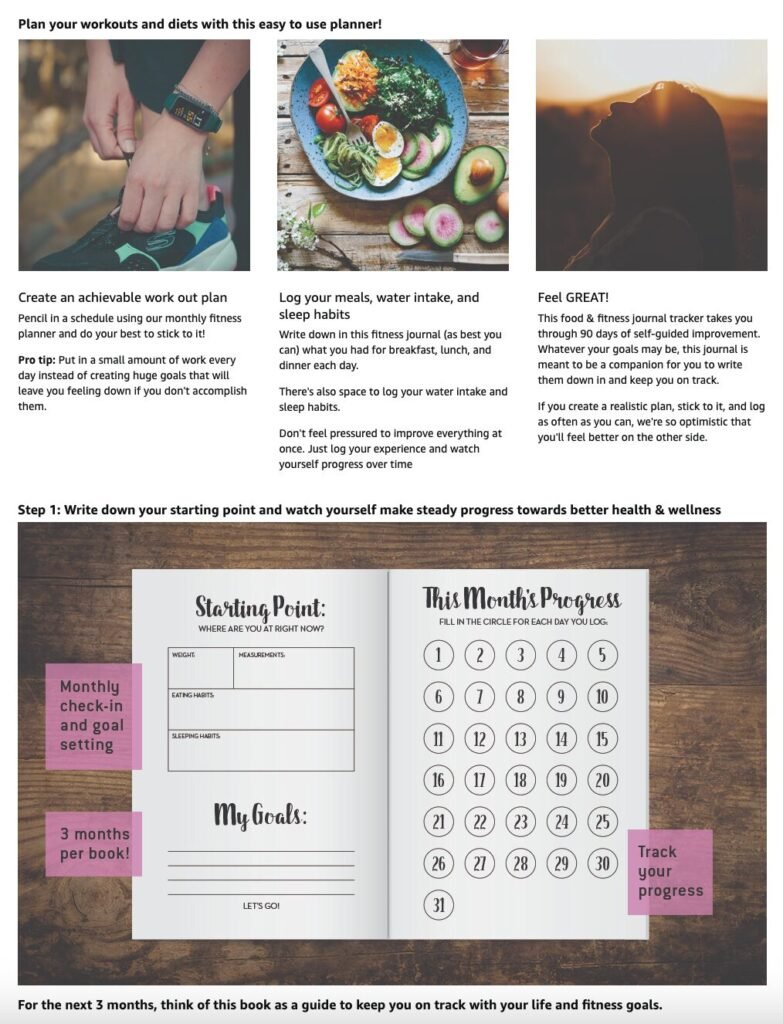
Here is an example of A+ Content:
Why It’s Worth Doing
A+ Content optimizes your book listing in two important ways:
SEO value. It’s searchable, and Amazon lets you add alt text (keywords) to each image – more on that below.
Buyer trust. It improves your listing by giving prospects the additional information they need to make a decision. Quality information and professional-looking graphics help you compete with traditionally published books, and give you the ability to look like you have a big publishing team behind you – which inspires buyer confidence.
Let’s face it. A prospect who discovers your book on Amazon hasn’t learned to trust you yet. They may trust Amazon, but they still need to figure out you – or the quality of your book. They’re cold traffic landing on your listing.
In his book Endless Referrals, one of my favorite authors, Bob Burg, coined the phrase Know, Like, Trust. He said: “All things being equal, people will do business with, and refer business to, those people they know, like, and trust.” Providing prospects with as much information, features, benefits, and social proof as possible increases your trustworthiness in their eyes – and gives them the confidence to take a chance on your book.
A+ content is made up mostly of images, though it can display text too. It offers a way to tell a visual story, which matters because so many prospects are quickly scanning your listing rather than reading it. A relevant picture can convey an idea more effectively than text alone – the human brain processes images 60,000 times faster than text, and 90 percent of the information transmitted to the brain is visual.
The graphical nature of A+ Content also creates a scroll stop, since it often looks very different from the rest of the listing. That contrast adds intrigue and curiosity, and gives you another chance to reinforce your book’s value before the prospect decides.
How to Create It
You build A+ Content from the KDP Marketing page, in the A+ Content Manager. When you create it, you choose between modules to build your layout — up to seven modules per listing. You can reorder and remove modules, add images, and add text.
Amazon offers several templates featuring graphic boxes of different sizes, some with editable text areas built in. You can also design your own images and upload them, as long as they fit Amazon’s pixel specs.
The look and feel of A+ Content varies a lot from book to book – even within the same genre. You have total control over the layout and the content. Used wisely, it will optimize your listing and increase sales conversions.
What to Include to Build Trust
Here’s what belongs in your A+ Content if trust is the goal:
Professional graphics
No typos or grammatical errors
Social proof – testimonials, book endorsements, media mentions
An author photo (people want to get to know you)
Additional views of the book, like a stack of books
Interior views and features
Instructions on how to use the book
Who the book is for
What the reader will learn or experience from it
How to Actually Use It
Focus on your reader. What questions might they have about your book? What unique content do you have that they’d need to read the book to find out otherwise? Even a nonfiction, self-help book can include non-text-based content that raises a prospect’s interest in and perception of the book’s value — worksheets, charts and tables, breakout boxes, or end-of-chapter action steps. Your A+ Content section is the ideal place to showcase it.
Share your book’s secret sauce. What’s unique about your book that the reader needs to know? Show it as much as you can using visuals, and tell them about it using text.
Provide more information about the book – maybe answer a few frequently asked questions right there in the module.
Showcase additional features, like added-value sections such as worksheets, charts, or indexes.
Use social proof to boost trust and credibility. People might be skeptical of what you say about your own book, but they trust endorsements, media quotes, and reviews — even from people they don’t personally know. Including some of these in your A+ Content reinforces the know, like, trust experience.
Don’t Skip the Alt Text
Besides making your listing look better, A+ Content helps turn prospects into buyers by giving them more product information – and it’s searchable, which helps your discoverability on Amazon.
Here’s the catch: while images aren’t searchable, Amazon lets you add alt text (keywords) to each one. If you have more than one image, use different keywords across them to maximize the variety of terms your listing can be found under. Alt text is meant to help screen reader applications, so try to have it describe the image while working in your keywords.
A caution straight from Amazon: submitting image alt text that doesn’t describe the image – and wouldn’t be useful to someone using a screen reader – can result in content rejection.
The Bottom Line
A+ Content can increase your book sales in a few ways:
Alt tags – additional SEO terms that can help increase your book’s discoverability and visibility on Amazon
Enhanced information – additional information that helps inform prospects and sells them further on your book
Professional presentation – a listing that looks professional, which increases prospect trust and helps them feel confident buying from an unknown author
Amazon has strict guidelines around A+ Content, so it’s a good idea to review them before you start building yours out.
This is just one piece of the full picture – A+ Content is one chapter of The Self-Publisher’s Amazon Playbook, where I walk through the complete system for optimizing a book listing on Amazon.
FAQ: A+ Content for Self-Published Authors
Is A+ Content free?
Yes – it’s a free tool available to all authors through the KDP Marketing page.
Where does A+ Content appear on a book listing?
Under “From the Publisher,” near the middle of the detail page. Most readers have to scroll to see it.
How much can A+ Content actually increase sales?
Basic A+ Content can increase sales by up to 8%. Well-implemented Premium A+ Content can increase sales by up to 20%.
How many modules can I use?
Up to seven, and you can choose from several Amazon templates to lay them out.
Is A+ Content searchable?
The images themselves aren’t, but the alt text you add to each image is – and that’s what helps your discoverability on Amazon.
What should I avoid when writing alt text?
Don’t submit alt text that doesn’t actually describe the image. Amazon can reject content if the alt text wouldn’t be useful to someone using a screen reader.
How is A+ Content different from the regular book description?
The standard listing caps you at about two thousand characters of text with no images beyond the cover. A+ Content lets you add graphics, layout, and a fuller visual story beyond that limit.
What should I include to build reader trust?
Professional graphics, clean copy, social proof (testimonials, endorsements, media mentions), an author photo, additional product shots, interior views, and a clear sense of who the book is for.
Before sitting down to write, ask yourself, “Does my book need a bun?”
Recently, I was craving a good burger, but I’ve been on a keto-type diet, and my beloved bread is not part of the plan.
I went to place a delivery order from a newish grass-fed burger place, thinking I would just put special instructions into the form asking them to leave out the bun.
Sure, I could throw away the bun… but first, there is the unnecessary waste of good food… and then…
I know myself… … if their tasty brioche bun was sitting before me….well, why suffer temptation?
As I perused the takeout menu, I was pleasantly surprised to see the option for a lettuce-wrapped burger!
Genius.
And it was really tasty!
This got me thinking about your book. The one you are thinking of writing.
You might think of it as a brioche bun when it could be lettuce-wrapped or deconstructed into a burger and fixings in a bowl.
Hopefully, I haven’t lost you here… so let me give you a few book examples to illustrate my question ‘does your book need a bun’:
Let’s say you want to write a book about your consulting methodology. You envision it taking twelve chapters to outline the problem, your methodology, and how it can be applied.
What if your message would get you great author results just as successfully as:
A book of case studies
A book of interviews
A step-by-step guide
A parable
A six-chapter, 50-page book
Or… any one of hundreds of potential book formats [yes, a colleague has studied and identified hundreds of formats!]
How do you decide the format for your book? Here are a few ways:
Think of books you have enjoyed – what is their format?
Think about your zone of genius… Is it interviewing? Is it breaking down complex tasks into smaller chunks and creating step-by-step instructions?
Consider your ideal readers – are they busy executives who want ‘just the facts’? Engineers who need lots of data?
You are unique. Your book can be as well.
Words differently arranged have a different meaning, and meanings differently arranged have different effects” is attributed to Blaise Pascal.
As we go into the Labor Day holiday weekend in the U.S., I encourage you to consider the format that will bring you the most joy and feel the least like labor!
Finding the sweet spot between your author goals, your zone of genius, and how you enjoy working can result in a book format that feels less like labor and is more fun to create—no bun needed—while still helping you achieve great results.
Pascal also said, “Let no one say that I have said nothing new; the arrangement of the material is new”.
A book launch strategy is a structured, multi-week plan of marketing activities designed to build anticipation, drive early sales, and maximize your book’s visibility before, during, and after publication. The most successful strategies follow the AMPT framework – Audience, Motivation, Profits, and Timeframe – and begin 4-12 weeks before your release date, using coordinated promotions, promotional partnerships, and clear deadlines to create momentum and drive action.
Crafting a successful book launch strategy is an art that merges creativity, strategy, and a deep understanding of your target audience. It’s not just about putting your book out there. It’s about creating an experience, generating anticipation, and engaging with your readers in a way that makes your book not just a publication but an event.
This comprehensive guide to book launch strategy will delve into the essence of running a successful campaign. We’ll outline our proven AMPT strategy: Audience, Motivation, Profits, and Timeframe.
Whether self-published or working with a publisher, you will want to understand what makes a book launch successful. A book launch aims to captivate the author’s intended audience and propel sales to new heights.
What exactly is a book launch? The commonly accepted definition is a range of strategically planned events, activities, and initiatives occurring in the weeks or even months before the release of a new book.
A big part of a successful campaign is getting buy-in. There will be people who will buy your book because they love you and they don’t care if the book’s topic is not of interest to them.
Most prospects will need to know what’s in it for them (WIIFT). The better you can articulate this, the easier it is for prospective readers to realize that your book is precisely what they want and need. For your promotional partners, they’ll want to know what’s in it for their audience — they need to provide value to their audience and understand why that audience will care about your book.
In This Guide to Book Launch Strategy
What Is a Book Launch Strategy
Why Most Book Launches Fail
Focus on Your Author Why
The AMPT Framework
Key Elements of a Successful Launch
How to Plan Your Book Launch Strategy
Frequently Asked Questions
What Is a Book Launch Strategy?
A book launch strategy is a structured plan of marketing activities designed to build anticipation, drive early sales, and maximize visibility before, during, and after a book’s release.
A strong book launch strategy goes beyond simply publishing your book. It includes audience building, promotional partnerships, and coordinated campaigns that begin weeks or even months before publication.
A typical book launch strategy includes:
Pre-launch audience building
Strategic partnerships and promotions
Coordinated marketing campaigns
Early sales and visibility efforts
Many authors focus only on publishing their book, but without a clear strategy, even a great book can struggle to gain traction.
While a book launch campaign focuses on execution, a book launch strategy defines the overall plan and direction behind those efforts.
Why Most Book Launches Fail
Many book launches fall short not because the book isn’t good — but because there’s no clear strategy behind it. Authors often focus heavily on writing and publishing, but underestimate what it takes to create visibility, build anticipation, and drive meaningful sales.
Without a well-defined book launch strategy, common challenges include:
Limited audience awareness before launch
Unclear messaging about why the book matters
Lack of coordinated promotional efforts
Missed opportunities for early momentum
The result is a launch that feels rushed, underwhelming, or quickly forgotten. The most successful book launches, on the other hand, are intentional. They are built around a clear understanding of the audience, a compelling reason to engage, and a structured plan to generate momentum over time.
Focus on Your Author Why
Many authors approach their book launch focused primarily on outcomes — sales, visibility, or recognition. However, the most effective book launch strategies begin with clarity around your deeper purpose.
Why did you write this book? What do you want it to achieve for your readers?
When your “why” is clear, it becomes easier to communicate the value of your book, connect with your audience, and create a launch that feels aligned and compelling.
A strong author “why” strengthens your messaging, your motivation, and your overall impact. Ultimately, your audience is asking one key question: what’s in it for them (WIIFT) — and your “why” helps you answer that clearly and authentically.
The AMPT Framework for a Successful Book Launch Strategy
To create a successful book launch strategy, it’s helpful to follow a clear and proven structure. The AMPT framework focuses on four key elements that drive effective and sustainable results:
Element
What It Means
Why It Matters
A – Audience
Who your book is for and how you reach them
The more clearly you define your audience, the more focused and effective your entire launch becomes
M – Motivation
Why your audience should care and take action
Strong motivation drives engagement, shares, and ultimately sales
P – Profits
How your book supports your broader business or goals
The most successful authors treat their book as an asset, not just a product
T – Timeframe
When and how your launch activities are executed
A well-structured timeframe ensures your efforts build on each other rather than happen in isolation
Each of these elements plays a critical role in building a launch that not only generates initial sales, but also creates long-term value and opportunities.
Audience: Who Is Your Book For?
A successful book launch strategy starts with a clear understanding of your audience. Who is your book for? What challenges are they facing, and what are they actively looking for solutions to?
The more specifically you define your audience, the easier it becomes to create messaging that resonates and to reach them through the right channels. When your audience is clearly defined, your entire launch becomes more focused, efficient, and effective.
Motivation: Why Should Your Audience Care?
Once you know your audience, the next step is understanding what will motivate them to take action. Why should they care about your book? What problem does it solve, or what transformation does it offer?
This is where clarity around messaging becomes critical. Your audience needs to quickly understand the value of your book and why it matters to them. Strong motivation drives engagement, shares, and ultimately, sales.
Profits: How Does Your Book Support Your Broader Goals?
A book launch strategy should align with your broader goals. While book sales are important, many authors benefit even more from the opportunities a book creates — such as speaking engagements, client acquisition, or increased visibility.
Thinking beyond the book itself allows you to design a launch that supports long-term growth, not just short-term results. The most successful authors treat their book as an asset, not just a product.
Authors profit from book launches in non-monetary ways as well. These can include new readers, book reviews, increased shares on social media platforms, and building a list of prospects by requiring their email address when they accept your bonus offers.
Nonfiction authors can generate profits beyond book sales from a constellation of related offerings, including speaking fees, consulting, coaching, and courses.
Timeframe: When and How Should You Execute Your Launch?
Timing plays a critical role in the success of a book launch strategy. Effective launches are not rushed — they are planned and executed over a defined period, often beginning weeks or months before publication.
A book release marketing campaign needs lead time to build momentum and excitement. Launch day or launch week can comprise a series of events springing from the book’s actual release. This can include any number of occasions, such as a book tour, a book launch party, a book signing, an in-person event, and multiple social media posts to boost an author’s online presence.
A well-structured timeframe ensures that your efforts build on each other rather than happening in isolation.
How much time does it take to become a bestseller? Amazon measures sales within a window of a few hours to determine bestseller rankings. The New York Times Bestseller list requires an author to make a minimum of 5,000 book sales in a single week across diverse retailers and from multiple geographic locations.
Key Elements of a Successful Book Launch Strategy
A successful book launch strategy is built on a series of coordinated actions that work together to create visibility, engagement, and momentum. While every launch is different, the most effective strategies tend to include the following key elements:
Audience Building
Building your audience before your book is released is one of the most important factors in a successful launch. This can include growing your email list, engaging your network, and identifying communities where your ideal readers already spend time.
Messaging and Positioning
Clear messaging helps your audience quickly understand why your book matters and why they should care. This includes your book’s promise, the problem it solves, and how it stands out from other books on the topic.
Building Pre-Launch Buzz
The pre-launch phase sets the stage for success. Leverage various platforms — social media, email newsletters, and your website — to tease your audience with captivating snippets, cover reveals, or even author insights. Engage in conversations, create anticipation, and invite your audience to be part of the journey.
Authors sometimes shy away from doing a pre-launch promotion because their book cover isn’t ready or they don’t have their book set up for pre-launch ordering. This shouldn’t stop you as long as you capture interested potential readers’ emails. We recommend setting up a book page on your website or as a standalone landing page.
Promotional Partnerships
Collaborating with others — such as influencers, colleagues, or organizations — can significantly expand your reach. These partnerships help introduce your book to new audiences and build credibility. Your partners can provide valuable social proof to your audiences, who may need to get to know, like, and trust you more.
Find people who already have the attention of your ideal readers. Reach out to fellow authors, even those with books on the same topic.
Cultivating Engagement
Engagement is the heart of every book launch event. Interact with your audience through Q&A sessions, live videos, or interactive social media campaigns. This will create a sense of community and involvement, making your audience feel personally connected to the book and its journey.
I have seen authors cultivate engagement by:
Sharing cover designs and asking people to vote on them
Providing updates on the book’s progress — turned in my first draft, got notes back from my editor, just saw the interior layout
Videotaping themselves seeing the book for the first time — the unboxing when their author copies arrive
Readers love to meet the author, so even if you are camera-shy, consider doing a Facebook Live or using other video content as part of your author platform building.
Launch Timing and Coordination
A well-planned timeframe ensures that your efforts build momentum leading up to your launch. Coordinated activities, such as announcements, promotions, and events, help maximize visibility during this critical period.
Early Sales Strategy
Generating early sales can help boost visibility and create momentum. This may include pre-orders, launch teams, or coordinated purchasing efforts during your launch window.
Deadlines and Incentives
One of the most powerful drivers of action in a book launch strategy is the combination of clear deadlines and meaningful incentives. Without urgency, even interested readers may delay taking action. Deadlines create a reason to act now, while incentives provide additional motivation.
As Jeff Walker, Creator of The Product Launch Formula and New York Times bestselling author, says: “If you want to double your results, double the impact that doubles your income – find a way to put a deadline on your offer. Absolutely a game changer.”
A scientific reason for this is tied to humans’ attraction to pleasure and rewards. The incentive theory of motivation underscores that incentives are the driving force behind motivation. Consumers are naturally attracted to incentives that offer value, such as discounts, complimentary gifts, and time-sensitive offers.
In a book launch, this can take many forms:
Limited-time bonuses for early buyers
Launch week incentives or special offers
Time-sensitive promotions tied to specific dates
Coordinated campaigns that encourage action within a defined window
Without urgency, even the best book launch strategy can lose momentum. When used effectively, deadlines and incentives help transform interest into immediate engagement – creating the momentum that drives a successful launch.
The Launch Day: Creating an Unforgettable Experience
On the day of your book launch, make it an event. Offer exclusive launch-day discounts, host live events or readings, and encourage your audience to share their experiences and reviews, turning it into a collective celebration.
Sustaining Momentum Post-Launch
Momentum doesn’t end on launch day; it’s about keeping the fire burning. Maintain engagement by sharing user-generated content, behind-the-scenes insights, or even a post-launch “thank you” campaign to acknowledge your supporters. You can also share media coverage or positive reviews of your book.
The key to sustaining momentum and continued success is to use the right tools, such as ad campaigns, Amazon ads, or qualifying for BookBub ads, and to have a consistent post-publication book marketing strategy.
How to Plan Your Book Launch Strategy Step by Step
Creating a successful book launch strategy doesn’t require complexity — but it does require clarity and consistency. By breaking the process into manageable steps, you can build momentum and execute your launch with confidence.
Step 1: Define Your Audience
Start by clearly identifying who your book is for. The more specific you are about your audience, the easier it becomes to craft messaging, choose the right platforms, and connect with readers who are most likely to engage with your book.
Step 2: Clarify Your Message
Your message should clearly communicate what your book is about, who it’s for, and why it matters. Focus on the transformation or outcome your reader will gain, rather than simply describing the content.
Step 3: Build Pre-Launch Momentum
A strong book launch strategy begins before your book is released. This includes engaging your audience, sharing insights from your book, and building anticipation so that readers are ready to take action when your book becomes available.
Step 4: Select Your Book Launch Model
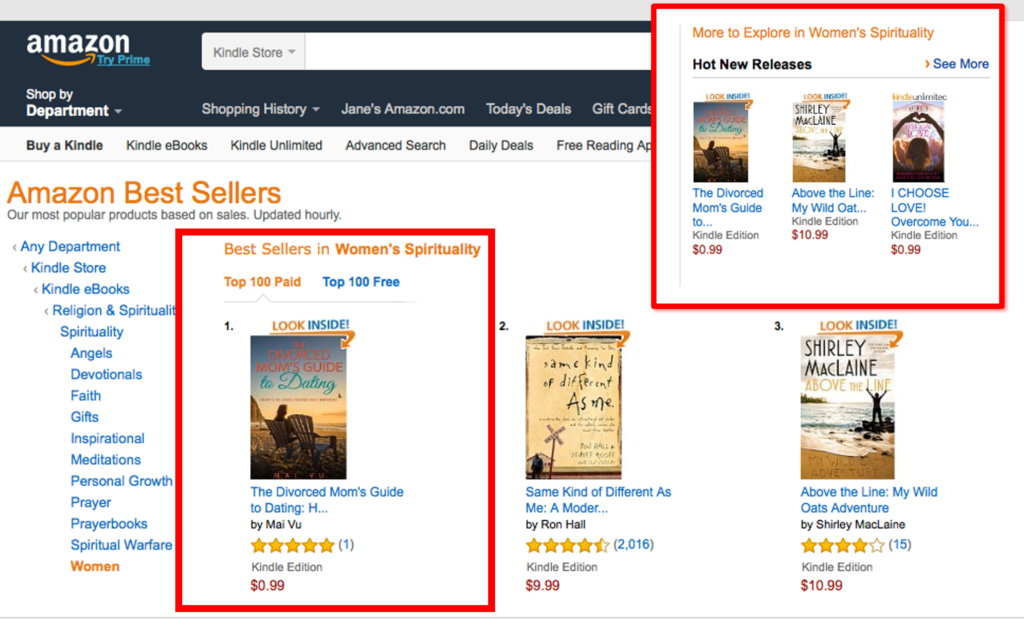
Select the type of book promotion plan best suited to your book, your audience, and your goals. This is especially true for first-time authors. An example of a book launch idea is a simple reduced-price campaign — your ebook would be on sale for $0.99 for a one-day promotion whose goal is to build momentum and achieve Amazon bestseller status. Another model is a bonus-with-purchase book launch campaign, which can be set up as a simple web page or a funnel that walks prospects through the steps of purchasing your book and claiming the bonuses.
Step 5: Coordinate Your Launch Activities
Plan how your promotional efforts will come together during your launch window. This may include announcements, partnerships, events, and coordinated outreach designed to maximize visibility.
Step 6: Track and Adjust
As your launch unfolds, pay attention to what is working. Tracking engagement, sales, and feedback allows you to adjust your approach and extend the momentum beyond your initial launch period.
Frequently Asked Questions About Book Launch Strategy
What is a book launch strategy?
A book launch strategy is a structured plan designed to build anticipation, generate early sales, and maximize visibility before, during, and after your book is released. It includes audience building, promotional partnerships, coordinated campaigns, and a defined timeframe — all working together to create momentum around your book’s publication.
How long should a book launch strategy last?
Most successful book launch strategies begin 4–12 weeks before publication and continue after launch to sustain momentum and visibility. The pre-launch phase is critical for building anticipation and an engaged audience before your book is available for purchase.
What is the difference between a book launch and a book launch strategy?
A book launch refers to the activities and events surrounding a book’s release, while a book launch strategy defines the overall plan, timing, and direction behind those efforts. Think of the launch as the event and the strategy as the roadmap that gets you there.
Do I need a launch team for my book?
A launch team can help amplify your reach, generate early reviews, and build momentum, but it should be part of a broader book launch strategy — not the entire plan. Launch teams are most effective when they are well-briefed, motivated with clear incentives, and supported by coordinated materials.
What is the AMPT framework for book launches?
The AMPT framework is a proven approach to book launch strategy developed by Jane Tabachnick & Co. It stands for Audience (who your book is for), Motivation (why readers should act), Profits (how the book supports your broader goals), and Timeframe (when and how launch activities are executed). Together, these four elements create a focused, effective launch plan.
How do I make my book launch successful?
A successful book launch strategy focuses on understanding your audience, clearly communicating the value your book delivers, creating urgency through deadlines and incentives, leveraging promotional partnerships, and executing a coordinated plan over time — ideally beginning 4–12 weeks before your release date.
How do I build a launch team for my book?
Start by identifying your most engaged readers, colleagues, or community members who genuinely believe in your book. Invite them personally, give them early access to your book, and provide clear, easy-to-follow instructions for how they can help. The more supported and appreciated your team feels, the more enthusiastic their participation will be.
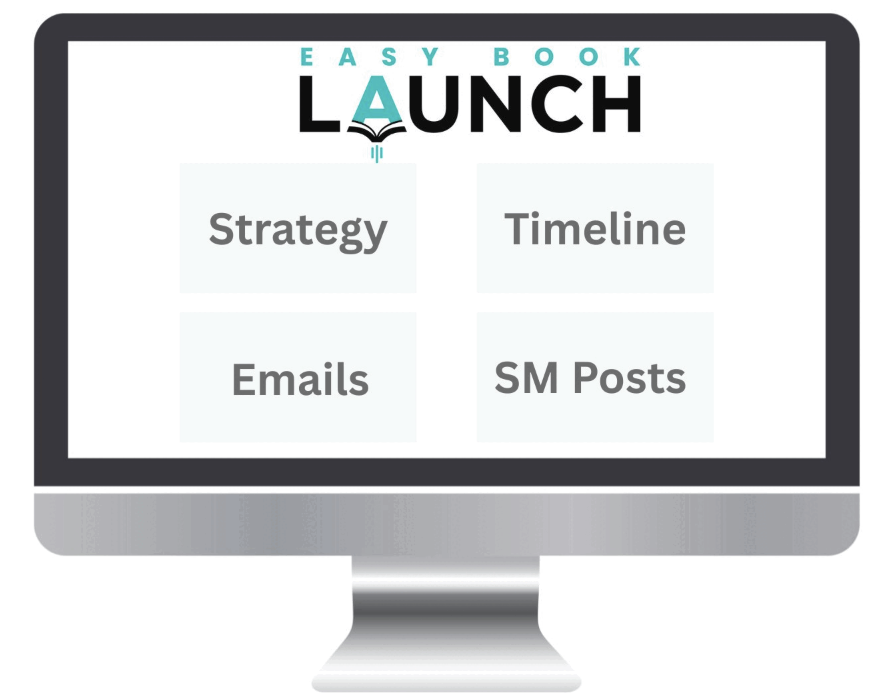
Ready to put your book launch strategy into action? Easy Book Launch is an AI-powered tool that helps you strategize your launch, build your campaign plan, and writes your email copy and social media posts – all in one place.
Want to keep the momentum going after launch day? The Author Content Engine interviews you like a podcast, then automatically generates blog posts, social media content, and more – so you never run out of fresh content to keep readers engaged.
Running a successful book launch campaign isn’t just about selling a book; it’s about creating an experience. It’s about building a community, a relationship with your audience that extends far beyond the launch day.
By focusing on your Audience, Motivation, Profits, and Timeframe through the AMPT framework, you can turn a simple book launch into an unforgettable experience for your readers – and a profitable one for you.
Remember, the success of a book launch campaign isn’t solely measured in sales figures. It’s also about the connections you build, the impact you make, and the journey you embark on with your audience. Embrace the creativity, utilize the AMPT strategy, and watch your book launch soar to new heights.
In the next post, I’ll outline our Perpetual Profitable Launch Strategy.
Sounds like hard work? It doesn’t need to be! Want expert help on your book launch? We offer Book Launch Campaigns done-for-you. Our new Bestseller Book Launch Lab is an excellent way for new authors to get expert book launch training while designing and building a successful bestseller book launch campaign done-with-you. More information coming soo
Authors often wonder should you self publish your book or seek out a traditional publisher. There are pros and cons to both avenues of publishing, so it’s important to understand them before making such an important decision.
You may think you need the know-how of a publishing house behind you or want the prestige that comes along with a big name publisher, but you’re a savvy woman and with the accessibility of self- publishing you need to consider it seriously as an option.
My top 5 answers to the question: Should you self-publish your book
1. Speed to market
When you self-publish your book, you eliminate the time you would have had to spend to find a book agent and then pitch a publisher. Instead, you can use the time to write, publish and promote your book. As a self-published author, you also can typically move through the publishing process faster, than a publishing house does.
In a few months, you can write and publish your book, whereas the search for an agent and publisher can take as long as two years, not including the writing and packaging of your book, which would be additional.
2. Total artistic control
While working with a publishing house, you get the benefit of their valuable insights and know-how, your book is your baby and having total creative decision making over it ensures that you will come out with a book that totally reflects you, your brand and your personality.
Should an opportunity arise around your book, whether it’s interest from a foreign market, or Hollywood has come calling, you get to decide if it’s right for you without having to consult with anyone.
3. you keep 100% of the profits
By publishing it on your own there is no one you need to share profits except the book store or online book retailer.
Most authors don’t make a lot of money from the sale of books, so being able to keep all of your share of the profit is beneficial. Additionally, when you work with a traditional publisher they give you an advance. That means that once you make book sales, you have to pay back the advance or draw out of the retail book sales. Once you finish paying back your advance, you have to share the remaining profits with the publisher, which means less in your pocket.
4. Book promotion and marketing
One of the big frustrations I hear from those who work with a traditional publisher, is that they don’t do much in the way of book promotion and marketing, until you become successful. Even with a publishing deal, as a first or second time author, you’ll have to do your own book marketing and promotion. You might as well self-publish and do your own marketing and promotion and know that you’re reaping all the benefits of those efforts, instead of having to share the rewards with your publishing company, who left you do the heavy lifting.
5. Equal access to distribution channels
Today, as a smart self-published author, you can get the same distribution and same visibility as traditionally published authors. You no longer need a publisher to get you into every bookstore, library, and online retailer. You can also maintain control of distribution, as well as the ability to offer discount pricing as needed.
The advantages to self-publishing are many, though there is a learning curve. Self-publishing doesn’t mean you have to do it all yourself, there are programs, coaches, and companies to help you publish your book like a pro. Done right, it can be hard to tell a self-published book from a traditionally published one.
The Case For Why You Need to Keep Positioning Yourself as an Expert.
This is the second time in my life it’s happened. A stranger asked for my autograph as I stood on the street. I was positioning myself as an expert without even realizing I was doing it.
I’m not a celebrity or a known personality. So why did these passers-by ask for my autograph?
I was a perfect September day and the passers-by were just following their instinct and conditioning.
You see, I was with my client Marya who was about to be featured on NBC to talk about her new book Career X, that we had recently published for her. We thought it would be fun to hire a video crew to document our experience leading up to being on NBC, and both she and I could use the video in our marketing.
So, the passers-by didn’t recognize us or mistake us for celebrities. They just assumed that we were celebrities based on our positioning -the video crew following us signaled to them and made them believe without a doubt that we were celebrities and they were just too bashful to even ask who we were.
They were attracted to us as celebrities – whoever we were.
So why am I telling you this?
As an entrepreneur or author, you should always be positioning yourself as the expert so that you stand out in your niche. It helps do the following:
Solidifies your expert positioning
Presells prospects on working with you
Creates an enhanced desire to work with you
It sets the expectation that as an expert, they can expect to pay premium pricing to work with you
Even if you are higher priced than your competitors or the highest price in your market, positioning yourself as an expert reduces price resistance and negotiation.
Take a lesson on expert positioning from celebrities like Richard Branson
Here is another example of expert positioning from a true, internationally recognized celebrity – Richard Branson – one of my business heroes.
Doing lead generation on LinkedIn, I noticed something in conversations with my new connections. Following some back-and-forth messages and a few phone conversations, if I believe that a connection might be a fit for my services, I will ask if they’ve ever thought of writing a book. On numerous occasions, I have gotten a sharp response back saying, “I’m already an author.” In one instance, the response was “I’ve written ten books and they are translated in multiple languages.”
I’m human and sometimes I make mistakes, so feeling I had possibly goofed and missed it on their LinkedIn profile when I initially reviewed it, I went back and checked. Nowhere on their LinkedIn profile is there a mention of their book. This always surprises me. For most people, writing a book is something that they’re immensely proud of. It’s a big achievement. And it’s a great expert position piece. So why isn’t it on their profile?
Branson and Gary V recognize the importance of positioning, continually. They both showcase their books in their profile graphic and title description.
Richard Branson takes his positioning even further by including endorsements for his book from other recognizable names – Sheryl Sandberg and Bill Gates. He shows that positioning is an ongoing process, even after you reach celebrity status.
Dan Kennedy, legendary marketer and author stated it well when he said:
“The simple truth is, if you aren’t deliberately, systematically, methodically – or rapidly and dramatically – establishing yourself as a celebrity, at least to your clientele and target market, you’re asleep at the wheel, ignoring what is fuelling the entire economy around you and neglecting development of a measurably valuable asset.”
Want help with your celebrity positioning? Schedule a complimentary strategy session here
The reason why you want to know how to run a bestseller campaign on Amazon goes beyond bragging rights. When done right, it will provide a significant boost to your book’s visibility and sales, as well as help garner book reviews. I am speaking here about Amazon Kindle Bestseller Campaigns.
Before jumping into the hows of a bestseller campaign… at the risk of stating the obvious, you want to start by writing a great book.
Visibility
When set up right, your book will show up high in the categories your potential readers are browsing in… this way it can be discovered. Amazon is a giant search engine, and like Google, people don’t go beyond the first page to search for results, so ranking high matters. In the case of Amazon, it is the opposite – a low number ranks higher with #1 being at the top. It is key to getting found by new prospective buyers.
Your book can also show up in the Hot New Releases section and potentially other sections that will give it additional visibility in front of your target audience.
Categories and Keywords
Your category and keyword research, when done right, along with optimizing your An optimized listing, will help your book continue to rank well long beyond the bestseller campaign.
When I refer to optimizing your listing – I mean carefully selecting your categories and keywords to help your book get discovered, and taking advantage and using all of the 2 categories and 7 keywords Amazon allows a book.
The optimization of a book listing is a combination of art and science. Sometimes authors see their book as belonging in a certain category, which may not be the ideal one, nor the one or the only one their ideal reader will search in. There are probably a number of ways your reader will browse for books like yours… so remain open. Research can help you identify the optimal categories and keywords. You can conduct your research by polling your target audience, researching similar books on Amazon, using a keyword tool, or hiring an expert.
You can always tweak or change your categories, however, if you aren’t sure why your book isn’t ranking the way you would like, changing the categories and keywords without getting professional input, is a bit like playing the lottery, and leaving the result to chance.
The momentum of a bestseller campaign is valuable on Amazon as it gives you a number of sales. It also boosts your book’s ranking and visibility. Keeping your promotion going beyond the initial campaign can really solidify your book rankings for an extended period. We continue to run a promotional campaign for a few days after the Bestseller campaign. Keeping the price at .99, we see steady sales, increased reviews, and long-term rankings boost. The books that have used this strategy continue to rank and bring in sales month after month with no additional promotion.
What Not To Do – Credibility Busters
Beg or hound friends and family to buy your book. Instead, join a number of book groups that allow you to post your promotion, or hire a service or professional to run your campaign.
Claim bestseller status when your book has no reviews listed. Think about it, is it credible that a book would become a bestseller and no one would have reviewed it? Instead, get a few reviews before running your bestseller campaign.
Post your book online with the bestseller seal on it, before its even published [if it somehow happens to pass Amazon scrutiny this way] before you even start your campaign or reach bestseller status. Instead, hire a graphic designer [a Fiverr for $5] to add the graphic, and upload a new cover once you have actually achieved bestseller status.
No Author page. Amazon gives you this great free marketing tool with Author Central, so why not take advantage and set it up before promoting your book.
Find out about our done for you bestseller campaigns here
Ever get a $7000 message? My client did, and this is just one example of how to profit from your book.
I was at a training with my client Mai. The same workshop where I ate fire! Mai, called me over and was clearly so excited she couldn’t contain herself.
I couldn’t wait to see what the excitement was about.
“Look at this message I just got from a prospect. It’s all because of the book. Oh my gosh! Thank you” Jane.
Note: Mai worked with me to write and publish her book The Divorced Mom’s Guide to Dating. We got the book written and published [to bestseller status] in about 90 days.
The message, which you can see in the image to the left, was from a reader, who was so excited and ready to sign up for coaching with Mai after reading her book that she emailed her and then sent her this message on Facebook to make sure Mai saw it as soon as possible.
How Mai’s book created a ready to buy $7000 coaching client
People buy from those that they know, like and trust. People can get a sense of you and your work from your book, if it’s written and set up correctly. What we did in Mai’s case was:
Tell her story, so readers connected with her instantly
Share client stories – so readers could relate to ‘people just like them’, who were in ‘situations just like them’ and who got ‘the outcomes they are seeking’
Give people a taste of her methodology/coaching program in the book
Include worksheets so that readers could start to do the work/ begin to experience results from Mai’s work
Included a beautiful invite to Mai’s bi-annual live event.
Have you ever tried to learn something from a book or program on your own?
What was the outcome?
As is often the case, people find that they are only able to get so far via a book or self-paced coaching or learning program, and then realize they need additional, more personalize support to reach their goals. That was the case with Mai’s reader. She’d gone as far as she could on her own, and she already saw Mai as the answer to a problem she was desperate to solve. So she signed up for a $7000 coaching program with Mai.
Imagine getting a text like this! If you are like me, and selling is not something you like to do….having clients lined up excited to sign up with you is pretty attractive. As a salesperson friend of mine joked, when I showed them the message Mai received, the only thing left to ask is ‘Visa or Mastercard?’
Ready to package your expertise and method into a book, and attract ready to buy readers?Let’s talk.
You are ready to get endorsements for your book. You’ve identified your ideal celebrities and influencers. Now it’s time to contact them and make the ask, but you may be wondering how to contact a celebrity for a book endorsment. Here are the top ways to find the contact information of celebrities:
Start with a Google Search
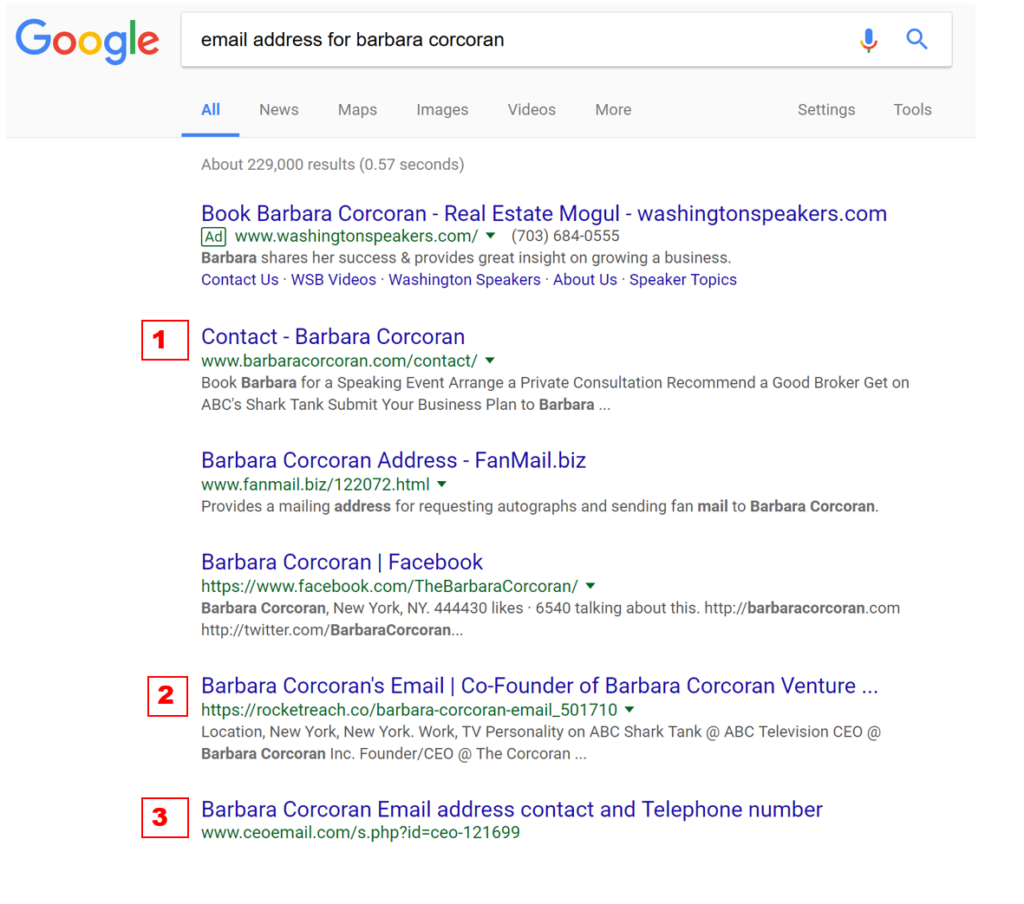
Google is a great resource for finding contact information. Start with a google search. Try being completely literal. Type in ‘email address for Celebrity Name’. We are going to use Barbara Corcoran as our example.
As you can see you get a number of results, including Barbara Corcoran’s own website [1], which is sure to have a contact form. We’ll save that for later.
In this search you see both RocketReach [2] and CEOEmail [3] which claim to give you email addresses. Both are free. It is worth having a look and copying down the email addresses into a file.
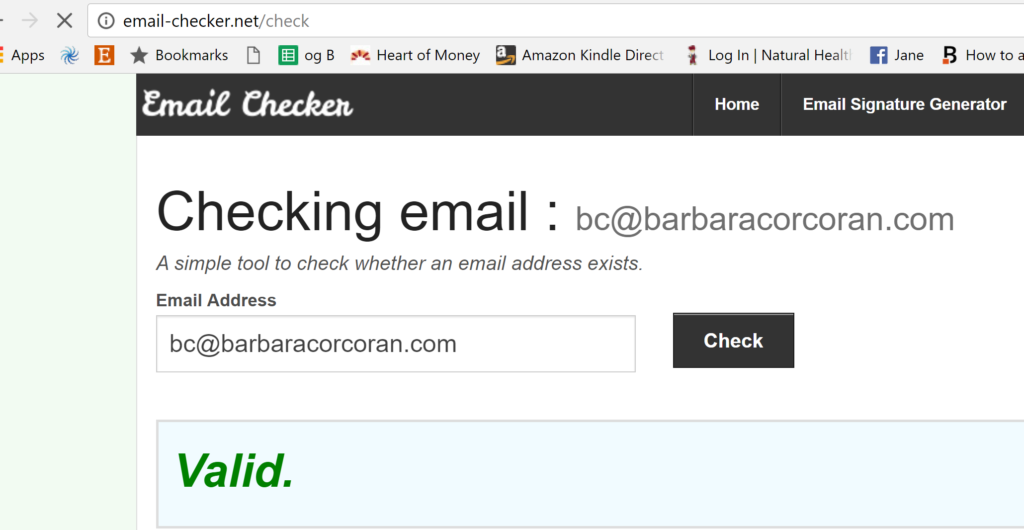
Test the email addresses to see if they are valid using this free tool:
In the event you don’t find any email addresses you can try the following:
Find an email address for a staff member at your celebrity’s domain. You can do a Google search, or try a Linkedin search using your celebrity as the company name.
For example: look for any address at @barbaracorcoran.com. From this you can determine the email convention they use. It might be ‘first initial’ and ‘last name’, or ‘first name’ only before the @ sign. You can then substitute your celebrity name in the same format as the email address you found.
How to Contact a Celebrity for a Book Endorsement- Ninja tips:
Address your endorsement request to a few different email addresses at the same time – addresses that you found, or just try a few of the most commonly used email conventions. That way you increase your chances of success, and any email address that is not valid, will send back an email letting you know that.
Add a read receipt- if used, it will let you know the email was received and read.
Use Press Contacts to request celebrity endorsements
Celebrities and high-profile people often have a PR firm on retainer or staff. You can typically find their contact info in a press release issued about the celebrity. These releases may be found on the celebrity’s website, or by searching for news about them.
Once you find out the celebrity’s PR contact you can either contact them to ask who to direct an endorsement request to, or just pitch them directly.
Use the Contact form on the celebrity website
The contact us form on any website is always available as a way to contact a celebrity, or anyone else. It usually goes to a general mailbox, often opened by an assistant. I have had success using this method to request endorsements, though it’s not my preferred method; I use it only when I can’t find a celebrity email address or press contact name and email address.
Here is why you should ask Barbara Corcoran, or any celebrity for an endorsement. They might just say yes!
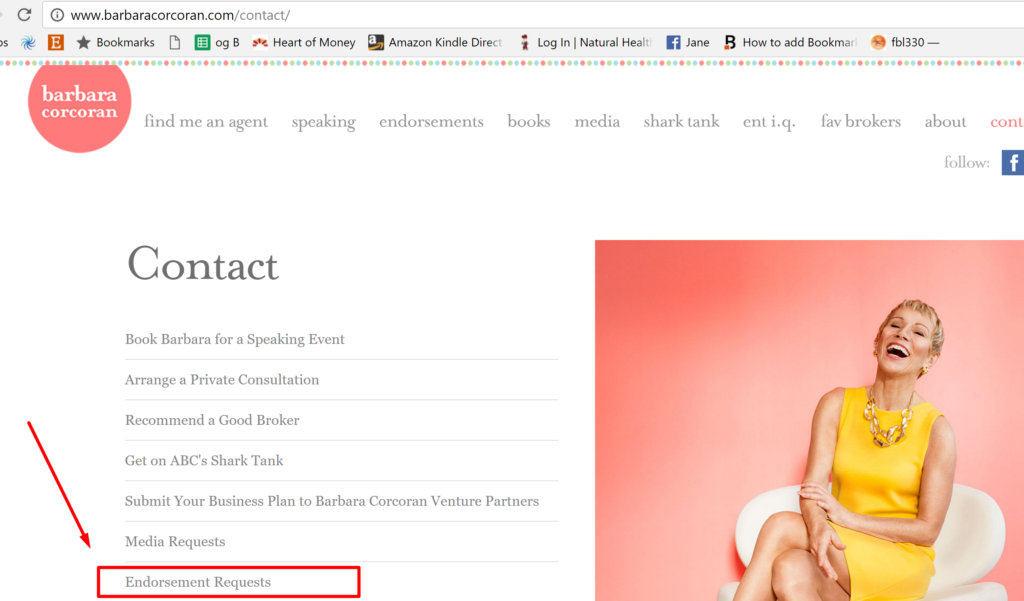
In fact, Ms. Corcoran encourages you to request endorsements, and has a dedicated link to make it easy for you.
Fast Track Your Results & Get More Celebrity Endorsements
Having celebrities endorse your book will lend credibility, prestige and authority. It will also help you sell more books.
Big brands have been using celebrities to sell products for ages. Think Michael Phelps on the corn flakes box to Ellen Degeneres in Cover Girl makeup commercials. They pay big fees to the celebrities because these endorsements help sell more products.
The good news is, with a little bit of effort on your part, you can get industry influencers and busy celebrities to endorse your books- and you won’t have to pay a fee.
I reached out to a top industry expert who was also a multiple New York Times bestselling author to get an endorsement for a client’s book. They agreed. We were thrilled! An endorsement from them would add incredible cache and authority to my client’s book. Weeks went by. We heard nothing. After more than a month, I reached out and asked if it would help if I sent some sample endorsements.
The expert’s assistant wrote back with a one word response: “Absolutely”.
We got their endorsement the next week!
The key to having celebrities endorse your book is to put in time up front, and to make it as easy as possible for them to say yes.
Here is how to get celebrity endorsements for your book
Create a simple, ‘package’ with all your information and materials to send via email.
Start by sending a very short, detailed note about your book along with your request and why you think they are the perfect person to endorse it. [Genuine flattery goes a long way!]
Offer a copy of the book as well as a representative sample
Many celebrities and experts will not want to read your entire book; however, you should offer them a copy of it as well as a representative sample [intro, table of contents and a chapter]. Rather than send the sample as an attachment, host your sample chapter in the cloud [drop box, google doc…] and offer a link to the files in your email.
Offer Sample Endorsements [3 -5 samples]
Let them know you recognize that they are busy, so you have drafted a few sample endorsements that they are welcome to use as is, or edit. This can make it easier for them. They can simply select one of your samples and email you back which one to put their name next to, or they can customize a sample endorsement to make it more ‘in their own voice’.
This last step of offering ‘sample endorsements’ can make all the difference between getting an endorsement or not, as you can see from my client example.
Sending sample endorsement works for two reasons. People are intimidated by a blank page. They aren’t sure where to start. By offering them some samples, you are helping to give them some suggestions and direction. They don’t have to think hard about this, and can comply with your request, by customizing one of your samples in a minute or two.
Remember, you are asking a busy people to take an action on your behalf. You want to have celebrities endorse your book. They get a lot of requests. The easier you make it for them, the greater likelihood you have of success.
Fast Track Your Results & Get More Celebrity Endorsements
I was recently asked by a fellow publisher “whether an author with limited time and resources should put them into social media strategies rather than trying to include publicity or even going exclusively the publicity route.” Does an author need PR and Social Media to succeed?
Here is my response:
Good question. The first thing I always want to know is where does your audience live, as it should inform a lot of where to put your efforts. If you target an audience that is rarely on social media, then that would not be a great use of all your efforts.
I consider social media as part of ‘the media’ nowadays
Earned media [others writing about you, talking about you…] is the most valuable type of content you can have [no one cares or believes what you say about you to some extent, especially on social media]. Others talking about you is social proof, third party credibility, perceived as an endorsement…
In our review economy [also called trust economy], people trust:
recommendations from friends and family
online reviews & recommendations and
the media [source: Nielson]
You have probably heard it said that people buy from those they know, like and trust… so media coverage/mentions are in the top 3 factors that influence buying decisions
The media are respected, and as it is they who decide what they write about; being the ‘selected one’ has additional value – i.e. they featured you over all the other experts out there.
When you are featured in the media, you get the halo effect of being associated with their respected brands…. that is why we say, as seen in the NY Times or cite a NY Times book review, and we don’t say “as seen on Facebook” or cite a Facebook book review, no matter how glowing.
As you can probably tell by now, I think that authors need PR and Social Media to succeed; I recommend authors use a combination of PR and social media… yes, even when time and resources are challenged [when aren’t they?]… all the more reason to learn how each medium works and learn how to maximize your efforts.
Want to learn more about how to do your own publicity? Please check out our Magnify Your Message program



 Before sitting down to write, ask yourself, “Does my book need a bun?”
 Words differently arranged have a different meaning, and meanings differently arranged have different effects” is attributed to Blaise Pascal.
 This article first appeared in my newsletter –

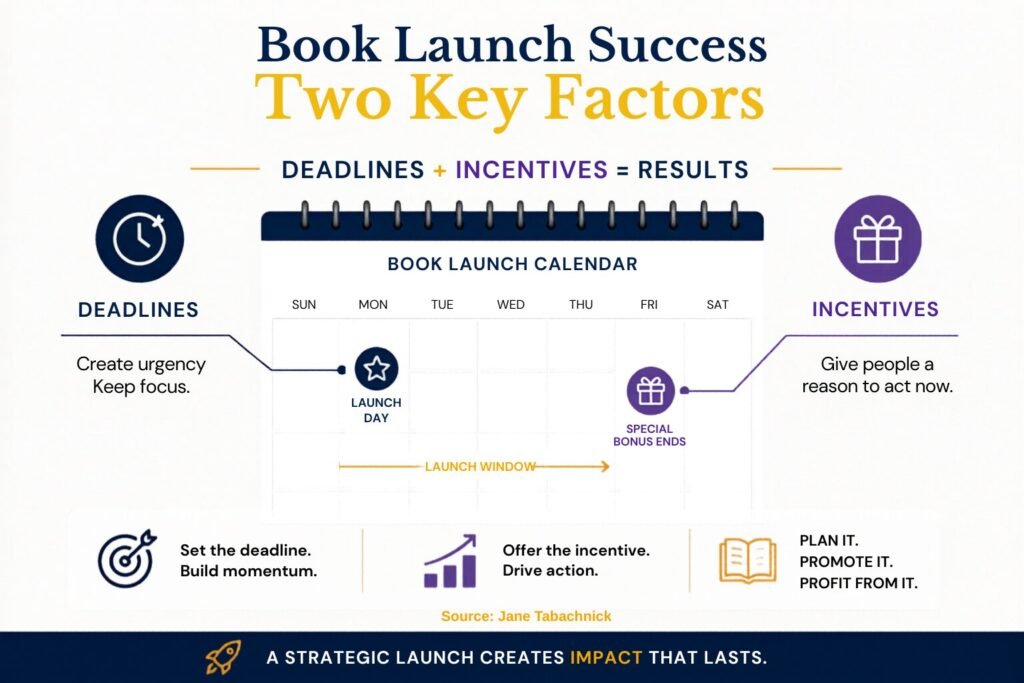 Deadlines and Incentives
 Authors often wonder should you self publish your book or seek out a traditional publisher. There are pros and cons to both avenues of publishing, so it’s important to understand them before making such an important decision.

 I was a perfect September day and the passers-by were just following their instinct and conditioning.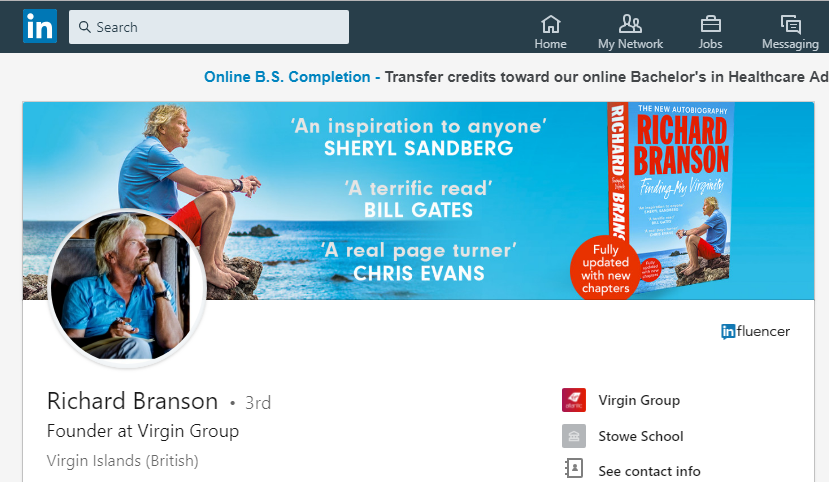


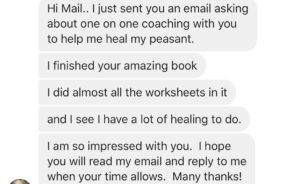 The message, which you can see in the image to the left, was from a reader, who was so excited and ready to sign up for coaching with Mai after reading her book that she emailed her and then sent her this message on Facebook to make sure Mai saw it as soon as possible.





 I consider social media as part of ‘the media’ nowadays