Your Customer Experience Equals PR

Customer Experience = PR

Customer experience is a part of your PR. A very important component.  

Studies have shown that there are two types of customers who talk about your brand and your business – ones that are raving fans and love you and those who are very unhappy with you or the experience they’ve had with your company.

What is the experience people have with your company?

Your customer experience equals PR for your brand

A few examples – Let’s start with the happy experience

Fat Witch Brownies, make the yummiest brownies I know. I like to send a box of their brownies as a gifts to help celebrate happy occasions and to thank business colleagues for referrals or other generous actions.

I had recently ordered a gift box of brownies to thank a business colleague for his help on a project, when they didn’t arrive at the recipient’s office, I found out that I had used the wrong address.

I called the Fat Witch and asked if there’s a way to check on where they had delivered my order to, and if there was a way to get them rerouted. I fessed up that I had made fat witch tin boxa mistake with the address. They said no,  unfortunately they couldn’t trace the package, however they would gladly send the brownies again and only charge me the shipping.  This had been my mistake, and yet they were willing to share some of the cost to resend my package.

Customers who encounter positive social customer care experiences are nearly 3 times more likely to recommend a brand. Source: HBR

The bad customer experience

I went online to use Haiku Deck, a presentation software that I had been using for awhile. After spending over an hour creating a new presentation I saved it and went to export it. A window popped up telling me that to export it into Powerpoint, I would have to upgrade to the paid version for $9.95. This was a new requirement, but I was fine with paying to use their service – that is until I completed payment and returned to my work area on Haiku Deck only to find that my hours worth of work hadn’t been saved.

Yes, technology is great when it works.

I was extremely frustrated, first about the the loss of time, but also that I had just paid and was now left with nothing. I contacted customer service whose response was that I had done something wrong. They had tested the software therefore I had done something wrong.

95% of dissatisfied customers tell others about their bad experience. Source : Dimensional Research.

Time lost in creating the presentation. Time lost talking to customer service. Not a happy camper. Now the mere mention or thought of Haiku Deck brings up the unpleasant experience, which is now imprinted on my brain.

 71% of customers say that valuing their time is the most important thing a company can do to provide good service.  Source: Forrester 

Now back to how customer experience, and particularly customer service is part of your PR.

Public relations by definition is the practice of managing the spread of information between an individual or an organization and the public.

Consumers trust recommendations from friends and family, online reviews, and the media – in that order. Consumers make buying decisions based on recommendations online reviews and companies they read about in the media.

If your if your customers are going online and writing about you, posting on social media, or making recommendations to friends and family, what are they saying?

Remember, like me your customers remember the excellent and exceptional experiences and the terrible ones, and that’s what they will talk about.

I know which experience I want my customers to have and what I want my customers to be talking about.

The Fat Witch, has a made me even more of a raving fan. I just had to go and tell a few friends on social media to show my appreciation.

Related content: Customer Experiences – A Tale of Two Entrepreneurs
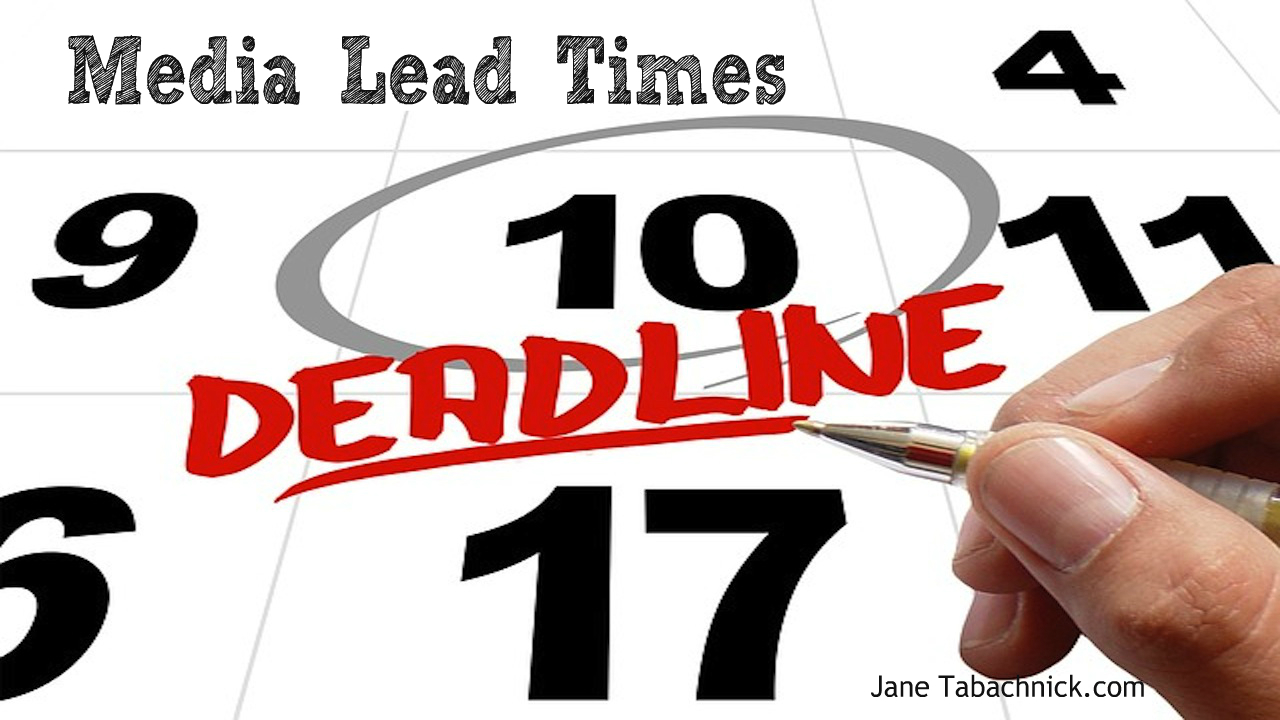
Media Lead Times – Key To Pitching The Media Successfully

media lead times deadline

Why I can’t get you into Entrepreneur or Inc. magazine next month.

I’ve gotten this request many times from prospects, “Can you get me featured in Entrepreneur magazine next month?”

No, I say without hesitation.

Not because I doubt my pitching skills but because there is something called lead times.

“Why not? I’ll pay whatever you charge,” persists the prospect.

Let me stop you right there. I didn’t hesitate to say no because TV, radio, magazines, newspapers, and some blogs and websites have lead times that govern their operations. These timelines may vary for different types of media outlets. Still, if you want to get media coverage or pitch a story or article, it’s essential to understand their lead times.

A Lead time in publishing describes the amount of time that a journalist has between receiving a writing assignment and submitting the completed piece. Depending on the publication, lead times can be anything from a couple of hours to many months. [source: Wikipedia]

Print publications like Entrepreneur or Inc. plan their issues four to six months in advance. This is one of the reasons that PR firms require a minimum 6-month retainer. Publicity can take time and planning to build a smart and strategic campaign, one that gets you media coverage.

As to my prospects who want to get featured next month, you are just too late. But don’t despair. With some planning, you can pitch the media with enough lead time to be quoted or appear on air, in print, or online.

Plan Backwards

1023px-Riding_a_Horse_Backwards_1110784Part of the key to successfully pitching publications on a story, a product launch, or an event is to work backward from your event date.

This way, if you were launching a product on February 1 of next year to get mentioned or featured in a print magazine such as Entrepreneur, you would have to start pitching 4 to 6 months before – in August to be safe.

I find planning backward can be can be beneficial when planning events and other promotional initiatives that have a firm date or event that I am building toward.

Here are some media lead times:

Monthly Consumer Magazine – Lead Time is four to six months

Newspaper sections vary [so it is best to check with the publication]

Daily Newspapers – Lead Time is one to three weeks*

TV Morning Shows [National] – Lead Time is two weeks to two months*

When in doubt, you can look at a publication’s media kit to see when the advertising closes for a particular issue; this will clue you into their lead times. You can always reach out to the publication to ask them precisely what their lead time is

* The one exception to these lead times can be ‘breaking news’. A story that has just happened and is considered very important and/or timely.

Related Content:

Before You Pitch The Media- 10 Things the Media Wishes You Knew


Promote Your Book Online – 8 Expert Tips

8-Expert-Tips-newWriting a book is a lot like having a baby. You need to prepare for the big event; a process often described as painful, yet one that yields beautiful results.

Pre-planning for your book’s publication is something you should start months before your publication date to ensure your book gets the notice that it deserves. Let’s help readers discover your book by promoting it everywhere online.

Here are 8 ways to promote your book and bring your book some much-needed publicity. Read my guest which appeared on the WiseStamp blog

Related: For more ways to promote your book get our Media Plan Template and our 2015 Publicity Toolkit and Planner

Book Promotion Using Press Releases

You’re An Introvert – I’m An Ambivert. So What?

Introvert_Ambivert_Publicity for IntrovertsThere is a lot of talk in the news about introverts lately. It’s the topic of conversation regularly for my publicity shy prospects and clients, and me.

The stories and articles I am seeing sometimes make it sound like it’s a competition – the introverts vs. an extrovert, which always troubles me. Why not celebrate our uniqueness and each other’s?

Introversion or extroversion are not new concepts or ways of being. Carl Jung is credited with coining the term ‘introverted person’ in 1918. Susan Cain’s book “Quiet: The Power of Introverts in a World That Can’t Stop Talking”, published in 2013, became a bestseller and has helped bring the conversation into the forefront.

The only reason that it matters if you’re an introvert or extrovert is that it can help you to know yourself better and help you leverage your strengths in your business, marketing and promotion, and in life. It can also help you in your interactions with other people by understanding their natural personality tendencies so you can communicate better with them.

Businesses have long recognized the value of personality and strength profiling and have adopted the use of tools like the Myers-Briggs or DISC assessments as part of an interview process or during on boarding of new hires. Entrepreneurs have used Strength Finders to help assess their natural strengths in an effort to better understand and improve the way they work.

There is no such thing as a pure introvert or extrovert. Such a person would be in the lunatic asylum. Carl G. Jung

Meet the “Ambiverts”

I just recently came to understand that I am an ambivert – a combination of introvert and extrovert. I didn’t even know there was such a personality type or a name for it before I started exploring introversion in my publicity mentoring work. As I sought to better understand some of the resistance my clients were experiencing and how I could help them get better results for themselves by harnessing their strengths, I observed publicity shy folks who were introverts, extroverts and ambiverts. This initial foray into understanding introverts formed the research for my book Publicity for Introverts™.

I never would have thought of myself as being an introvert, even if only partially, as I am outgoing in social situations and like to talk about my thoughts and feelings [just a few of my extrovert tendencies]. That said, I really enjoy and need to spend alone time working, reflecting and recharging my energy [my introvert traits]. I actually never gave this much thought to this until it became part of my client work, but if I had to choose one team, I would have leaned toward extrovert.

Turns out that according to Jung’s analytical psychology each of us has both – traits of extroversion and introversion. One set of traits may be more dominant in individuals, and to make it even more interesting, people do not always behave according to their behavior type all the time.

I’m not a big fan of labels, but I do find them empowering as a tool, and use their associated traits to understanding myself and my clients better. It makes sense that our personalities aren’t all black and white, and it’s clear to me now that I am an ambivert.

How do you identify yourself, and what impact does it have on your marketing and promotion?

The biggest challenge I see with my clients is the way they think and speak to themselves about doing publicity.  This includes a lot of ‘shoulds’, ‘ought tos’… and generally, unnecessary and self-defeating thinking.

What makes this self-talk abuse is the comparing yourself to someone else and how they are promoting themselves and their business. The only thing you should be doing is what is right for you, and then finding a way to do it that is empowering, and transforms it from a ‘supposed to’, to a ’want to’ and has you taking action, without the internal struggle.

I am a firm believer that life begins at the edge of your comfort zone.

The key is to figure out your own PR Persona™, which harnesses your own unique strengths and traits, as well as where you have decided you are willing to step out of your comfort zone [for a new action or strategy].

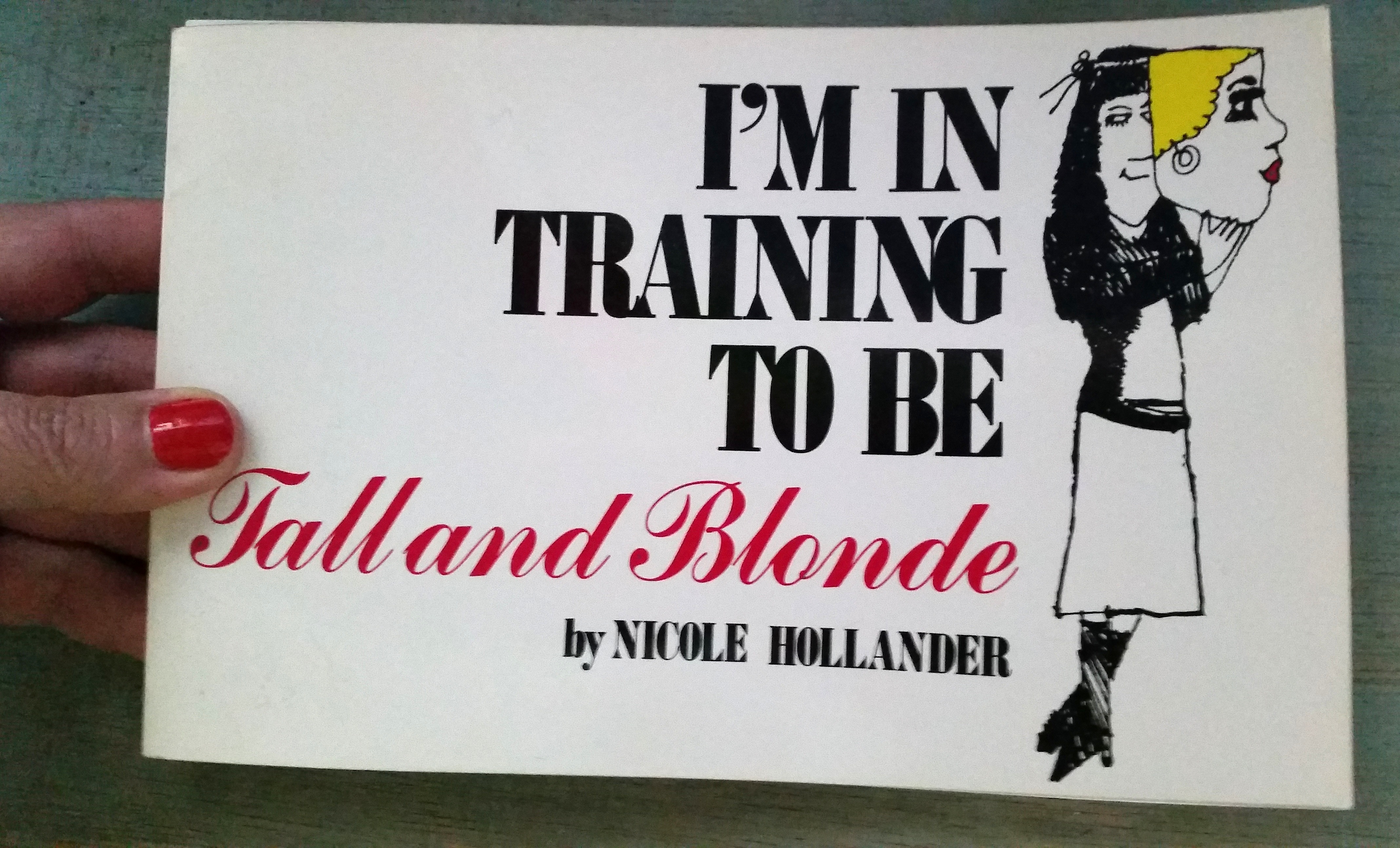
Writing this article made me think of a cartoon book I read years ago entitled, “I Am in Training To Be Tall and Blond”. You don’t need to be in training to be anyone but the best version of yourself!

If you’re interested in getting visibility whether you’re an introvert or someone who is spotlight shy, but the thought of it makes you uncomfortable, then let’s talk. I can show you ways to become more being visible and getting media attention without compromising who you are.

To your publicity success!

with love,

Jane

PS. After I drafted this article, I saw a copy of “I’m in Training To Be Tall and Blonde” sitting on the top of the free bookshelf in my apartment building! Synchronicity?

Kenneth Cole Uses My PR Tip to Score Big Press- You Should Too!

It’s so much fun when you see your PR tip put to good use… and getting results- Publicity!

Just a quick note to share with you something exciting.. and to encourage you to take advantage of this free tool, if you aren’t already and get set up for more Publicity today!

I am talking about Google Alerts.

Google alerts have been part of my PR tips and toolkit for as long as I can remember. If you have done any of my trainings or been on my list for awhile, you have probably heard me recommend them! It is one of the best free tools you can use to track PR, build a media list, get pitch and content ideas….

In fact I just made a new video for you about how to use Google Alerts – and hadn’t had a to post it yet when… I saw this headline on Time Magazine’s website:

Kenneth Cole Replaces Man’s Stolen Bag After Learning of Theft From Google Alerts read the full article here

I got so excited. Kenneth Cole’s team is using Google alerts as I recommend…and they used the alert to take action, resulting in some great publicity.  Free tool. Free Publicity! How exciting!

This is the kind of PR tool that works for you, no matter what your company size.

I want to make sure you benefit from Google Alerts and maximize this PR tip and get more publicity – I show you how in this video:

It shows you the best way to set up your alerts… and how to use them for the most return on your time.

Update: I have found Talkwalker alerts discover more content than Google Alerts. They are also free- same set up recommended.

Related Content: 

How to Use Press Releases to Promote Your Book

Publicity Shy? Here are 6 Tips To Overcome It

Want Publicity? 6 Ways A Dress Rehearsal Will HelpI was watching the Tony Awards the other night, and thought I was about to witness something I had just been thinking about – the value of dress rehearsals. Literally.

It was around the third wardrobe change for co-host Kristen Chenoweth that I began to wonder if they had done a dress rehearsal in the latest dress. The neckline of this black coat dress was cut low and with every dance move that had Kristen bending forward, the dress revealed more and more…I thought we were going to see much more than she intended. – flashback to Beyonce and Janet Jackson Superbowl wardrobe malfunctions.

That may sound like an extreme example, however if you think about it, you don’t know how you or your clothing will look or perform in a public situation, unless you hold dress rehearsals.

A rehearsal is an event that occurs as preparation for a performance. It is undertaken as a form of practicing, to ensure that all details of the subsequent performance are adequately prepared and coordinated. Most commonly employed in the performing arts as preparation for a public presentation, rehearsals are nevertheless used in other contexts, as well, to prepare for the performance of any anticipated activity [source: Wikipedia]

I’ve been thinking about the difference between publicity shy or nervous about seeking media attention and putting yourself out there, and being confident. A dress rehearsal can be the best gift you can give yourself; and not just the shy, introverts, and newcomers, experienced individuals still need to do a trial run or be at risk for a variety of unnecessary mishaps.

A dress rehearsal, in every sense of the word, can make all the difference. Whether you are seeking publicity and on camera interviews or public speaking opportunities or even a job interview, you can benefit from a complete dress rehearsal. You may ace your interview brilliantly, and the last thing you need would be a wardrobe mishap or malfunction.


Here are 6 ways a dress rehearsal will help you be a media darling or ace speaker:

Build Confidence – Practice may not make perfect, however it builds your speaking or interview muscles and along with them your confidence. Each time you do an activity, even in practice, you get a little more confident.

Master Rhythm and timing – A speech or interview can take a few tries before you develop pleasant pacing and delivery.

Shape Your Ideas and talk into concise sound bites – The media love you to speak in concise, easily quotable sound bites. Speaking in this fashion for most of us requires practice.

Get comfortable with technology – whether it’s a head set or a PowerPoint clicker, you want to learn to use them without a live audience watching you fumble or struggle with them.

Wardrobe – A full tryout of your head to toe outfit and make up while give a speech and doing all the activities you will be doing in the public eye, will ensure you don’t have embarrassing surprises. Try getting in and out of a car, climbing stairs, standing and sitting in your outfit. The wrap dress that looks great while you are standing on stage, may unwrap when you sit, causing a very revealing problem for a seated interview.

Try it on for color – A few photos and videos from head to toe while standing and seated, will ensure you like the way the outfit looks on film, and catch any other potential color clashes in advance.

Background Check – A distraction in the background can detract from your success. If you are going to be on a televised show, ask what color the background is, and check clips online to see what color outfits past guests looked best wearing on air.

If you are going to shoot your own video, have someone photograph you on the spot where you will be standing to record. Make sure the clothing works with the background, and also that there are no distracting objects behind you or that appear to be growing out of your head.

You can always hire a coach or mentor to help you build media skills and confidence.


Most of us don’t like surprises. Especially embarrassing ones.

What event do you have coming up that could benefit from a dress rehearsal?


Customer Experiences – A Tale of Two Entrepreneurs

How do you show up to yoScreen shot 2015-04-20 at 2.20.03 PMur audience?

How you show up, and the customer experiences they have with your brand, can make all the difference to you personally, to your business success as well as your satisfaction in life.

Here is a tale of two entrepreneurs.
When you do a lot of marketing and networking online, as I do, it’s exciting to actually get to actually meet a fellow entrepreneur in person or speak to them via Skype.

I was at a marketing conference last year and was entering the ballroom after the break, when I recognized a guy in front of me, a fellow marketer, whose list I had been on for a few years after buying a few of his training products. Waiting until he finished conversing with another attendee, I approached him, excited to have the opportunity to meet him in person. I introduced myself to him and told him who I was and that I had been on his list for a while. To my great disappointment, I didn’t even get a smile. I got a grunt of acknowledgement before he stepped up his pace to catch up with the buddies he had been with, or to get away from me faster.

 People will forget what you said, People will forget what you did, but people will never forget how you made them feel – Maya Angelou

The second marketer.

I was on a webinar with a marketer whose list I have also been on for a few years after buying an info product from him at one point. I was interested in the offer he was making and I had a question about the bonus.

I sent him an email, expecting that the response I got would actually come from his customer service person. Here is the email that I received:

Hi Jane! 🙂

It always makes me smile to see your name pop up in my inbox. I think you’ve been one of my longest customers. Thanks 🙂 I really appreciate it. 🙂

Roxie (my wonderful head of support / affiliate manager) has everything put together in a package so I’m going to forward this e-mail to her and she’ll take care of it.

Thanks again & I hope you’re well. 🙂

Have a great day

Cheers

– Adam

Wow. Isn’t that lovely! It made me feel warm, fuzzy and appreciated. Adam has a customer for life, as well a [an even more] raving fan.

How are you showing up and treating your prospects and customers? I know which interaction I prefer to have – the same customer experience I strive to deliver.

As for the first marketer – I came home from the conference and unsubscribed from his list.

Related Content:

PR is Part of Your Customer Experience

2 Steps to Becoming a Media Darling

Media DarlingToday I want to share with you how to be a Media Darling – A celebrity who is especially popular and who receives frequent and very favorable attention in the news media. It’s easier than you think! Done right, it can have the media seeking you out on a regular basis!

There are two keys to being a Media Darling. Mindset is the first aspect.

Be a go giver and help other people get what they want [journalists] so that you can then get what you want [publicity]

Give journalists what they need. A great story, all the information in a neat package they can just cut and paste from, as well as showing them support and love on their work – not just the stories that feature you.

A recent study by MuckRack revealed:

  •  76% of journalists feel more pressure now to think about their story’s potential to get shared on social platforms (which can be measured with our Who Shared My Link tool).
  •  75% of journalists use Twitter to build their own brand. (And 86% of them check Twitter several times per day.)
  •  82% of journalists said incorporating an image is the #1 important ingredient for content share ability.

So more than ever before, Journalists feel more pressure to get their stories shared. You can show them the love by Retweeting, liking, commenting on and sharing their stories.

This works because it helps the journalist get social proof and positive feedback on their work. It also helps put you on their radar. When they see your comments, likes and re tweets, they view you as a friend, an ally, and a familiar name. When you go pitch them, they recognize your name, associate it with your support and social love, and will give your pitch more attention than other pitches they get. In other words, they are predisposed to want to like your pitch!

Now the Second Part are your media assets. The tools journalists expect you to have. These are an online media room and a press kit.

87% of journalists surveyed in the Tek Newsroom survey 2014, expect companies of all sizes to have an online newsroom.

An online newsroom and media or press kit are great because they make it easier for journalists to write about you. It may be 3 am… they are on a deadline… They are looking for information they can grab to complete their article. They don’t have the time to call you, trade messages and finally get to speak to you. Your newsroom gives them everything they need to write about you – 24/7, even if you are playing golf or sleeping. Its a win-win. They get their story. You get media coverage. Sweet.

The newsroom is also a place to showcase your media coverage. Over time, you will build up an impressive list of media mentions and self-generated news. Your prospects, clients and partners will also use it to learn more about you. The newsroom gives you additional expert status and credibility – as media mentions are perceived like endorsements from the media or a 5 star review on Yelp. Additionally, while your competition may have media coverage, chances are they aren’t showcasing it. If you don’t let people know about it, its like it doesn’t even exist…… If a tree falls in the forest….

Your newsroom can simply be a page on your website that you add content to regularly.

No newsroom would be complete without a press kit. This is a downloadable folder of information about you and your company. It can simply be a PDF containing key information about your company, as well as a high-resolution headshot and high-resolution book cover or product shot [as appropriate].

As many of you know, my passion is creating DIY [do it yourself ] tools that make it easier to do your own marketing and promotion.

One of these tools is my Magnetic Media Kits for Authors.  They come with the standard Jane design – elegant, simple, and no technical skills are required.

Related Content:

 10 Things The Media Wishes You Knew – Before You Pitch Them

The #1 Skill to Master for Successful Publicity and Content Marketing

The pitchI started to write this post about the importance of creating a great pitch or headline for your press release, and I realized a its just as critical to be able to craft a compelling concise email subject line or blog post title.

As Shakespeare said, “Brevity is the soul of wit”

A great pitch or headline can also make all the difference in your business.  Consider this. In our age of information overload, we scan article headlines and email subject lines and decide in the flash of a nanosecond it takes to scan the letters and words making up our opener, if we are going to open it right away, or perhaps not at all.

The #1 skill to master for successful publicity and content marketing, is the ability to craft a great and concise pitch.

As you can see, while great pitches, compelling press release headlines, and email subject lines are key to getting media coverage, this goes beyond Publicity. It impacts pitches to new prospects, partners, investors, journalists and potential partners.

When a journalist, or you yourself, scan your in box, it’s the subject line and possibly the first line of copy that gets seen in the preview window. It’s got to be attention grabbing or it gets deleted. It’s that simple.

In addition to being attention grabbing and compelling people to want to know more, it has to be short and communicate your message in as few words as possible. I know, no easy task.

Your existing email newsletter subscribers and blog readers already know and love you, and yet, they too may be ignoring you – only because of a less than compelling headline amongst a sea of headlines or subject lines in their inbox.

You can think of your headline or subject line as a tough gatekeeper – that can keep you from being in direct communication with your dear/cherished audience. It’s your job to charm the gatekeeper.

How Twitter [X] Can Teach You to Pitch Better

X, formerly known as Twitter, with its 140-character constraint, is a great way to hone your writing skills. You have to say what you need to say within the proscribed character limit or be cut off mid-thought, which is not a good option and can look unprofessional.

Sometimes, getting the words to fit into your tweet is trial and error. Sometimes, a bit of compromise. It can be done successfully, as there are over 400 million tweets sent daily, as well as people who have built massive followings by honing the art of communicating well within the word limit.

Google cuts off news headlines and articles, at 70 characters, so your press releases, blog posts and article titles display best within that even smaller number.

Ready to master the art of concise headlines and pitches?

First of course, you need a story idea. Then, to tell it within 70 or 140 characters, you sometimes need just a bit of help coming up with other words – synonyms or alternate ways to say the same concept or idea.

My favorite tools are the excellent old Thesaurus and the more updated version – Visual Thesaurus– which is actually an online interactive thesaurus and dictionary in one. It’s pretty, fun to use and very useful.

Other tools I find helpful are:

Wikipedia – under any given topic, they have related topics or ideas. This works as a brain jumpstart for me, sometimes giving me just the new word I need.

Photo libraries – sometimes the images that come up for a keyword search provide new ideas and ways I hadn’t yet thought of to voice my idea.

You may have to try a few to find what works best for you.

There are some other cool headline tools out there – watch for my list of them in the next week.

In the meantime, remember – a pitch or a headline is meant to be an irresistible invitation to read more. Its not intended to tell the entire story. In this instance, being a tease is a good thing!

In case you were wondering – My subject line for this post is 52 characters so that it would work well on Google, As an email Pitch, A press release headline, or on X!

It also has another success factor in it.  Do you know what that is?  Post your answer below. I’ll be giving a prize to the first person to get it correct!

Related Content:

How Not to Be One of the 45% of HARO Media Pitches That Suck

Is It O.K. to Curse In Your Marketing?

swearing-294391_1280

Do you think about how you come across?

I know I do. I tend to lean towards being polite and professional – call it a bit old fashioned, but that is how I was raised. I have a humorous side that I am trying to let you see more of….. and in real life, I curse sometimes. But you haven’t seen cursing in my marketing.
How would you think of me if I cursed in my marketing? Would it offend you? Would you quickly unsubscribe?

Allow me to digress for a moment. Last week I attended the Entrepreneur Conference – Winning Strategies for Business with a keynote by branding expert Erika Napolitano.

A few of the things Erika said, which I loved, were “Never Apologize for Who You Are”  and I refuse to turn down my ambition because someone else is uncomfortable with the volume.”

Erika elaborated on how being yourself, even it if offends someone, brings you closer to your ideal customers; those who ‘get’ you and love you for exactly who you are.

Who doesn’t want to work with raving fans?  Who needs customers who have you walking on egg shells? This really resonates with me, as it’s something I have been conscious of and striving for myself.

During the panel discussion Erika Napolitano, Chris Penn and Laura Fitton offered a lot of smart business insights and tips. There was also some cursing. Did I mind it? No.

It did get me wondering though. Was it necessary? We spent the drive home from the event talking about authenticity in marketing, how much of yourself you should reveal, and whether cursing is professional or even necessary.

I did get the sense that I was seeing Erika, Chris and Laura themselves – not a ‘manufactured for public’ version of themselves. I felt their authenticity, and that they were there with no holds barred and no information held back. It endeared me to them and also added a trust factor.

So cursing may not be for you. I don’t plan to start cursing in my marketing any time soon, however, I am striving to be more fully ME in my communication with you, as if you were sitting in front of me and we are having a conversation.

It’s not that I haven’t been authentic with you, I have. I think my own position about whether to curse in your marketing comes from having a notion that marketing is marketing, and my life is my life, and n’er the twain shall meet.

But life, and marketing aren’t like that. Have you noticed? There are lessons that each can learn from the other… and all business and none of me, doesn’t make it relatable. We want to work with people, and we want to have that “know, like and trust” feeling before deciding to do business with them.

So, feeling empowered about being myself, I was surprised to get a long email from someone who attended my webinar on Wednesday, telling me how I offended her.

I have to say, my initial response was good! I am being more of the Me I want to be in business.

Don’t get me wrong – my goal is not to make people feel uncomfortable or to be offensive just for the sake of being offensive. That would be professional suicide right?

What I had done was to be authentically me on the webinar. I had provoked such a strong reaction that this attendee felt compelled to let me know. This is why it’s a great thing on a few levels:

~  that they shared their feedback – I am sure they feel better, and I value the time they took as well as the information they shared

~  we both now know that we aren’t a fit to work together – that frees us both up to move onto prospects or service providers who are a better fit for each of us

By sorting out those who don’t get you, or are offended, you make room for those who do ‘get you’ and like your style. If you are busy worrying, there won’t be enough business left – you are going down the wrong rabbit hole. There is plenty of business around, made up solely of your raving fans.

To be authentic, I know I don’t need to curse, and neither do you. What you do need to do, for more engagement and deeper client relationships, is be yourself.

As Oscar Wilde said, Be Yourself – Everyone Else is taken.

It’s the best positioning you can have in your business and in your publicity!

How can you be more authentic in your own business and create more know, like and trust with your audience? I’d love to hear your feedback on this.

Related Content: 

Why Your Brand Needs Both PR and Content Strategy